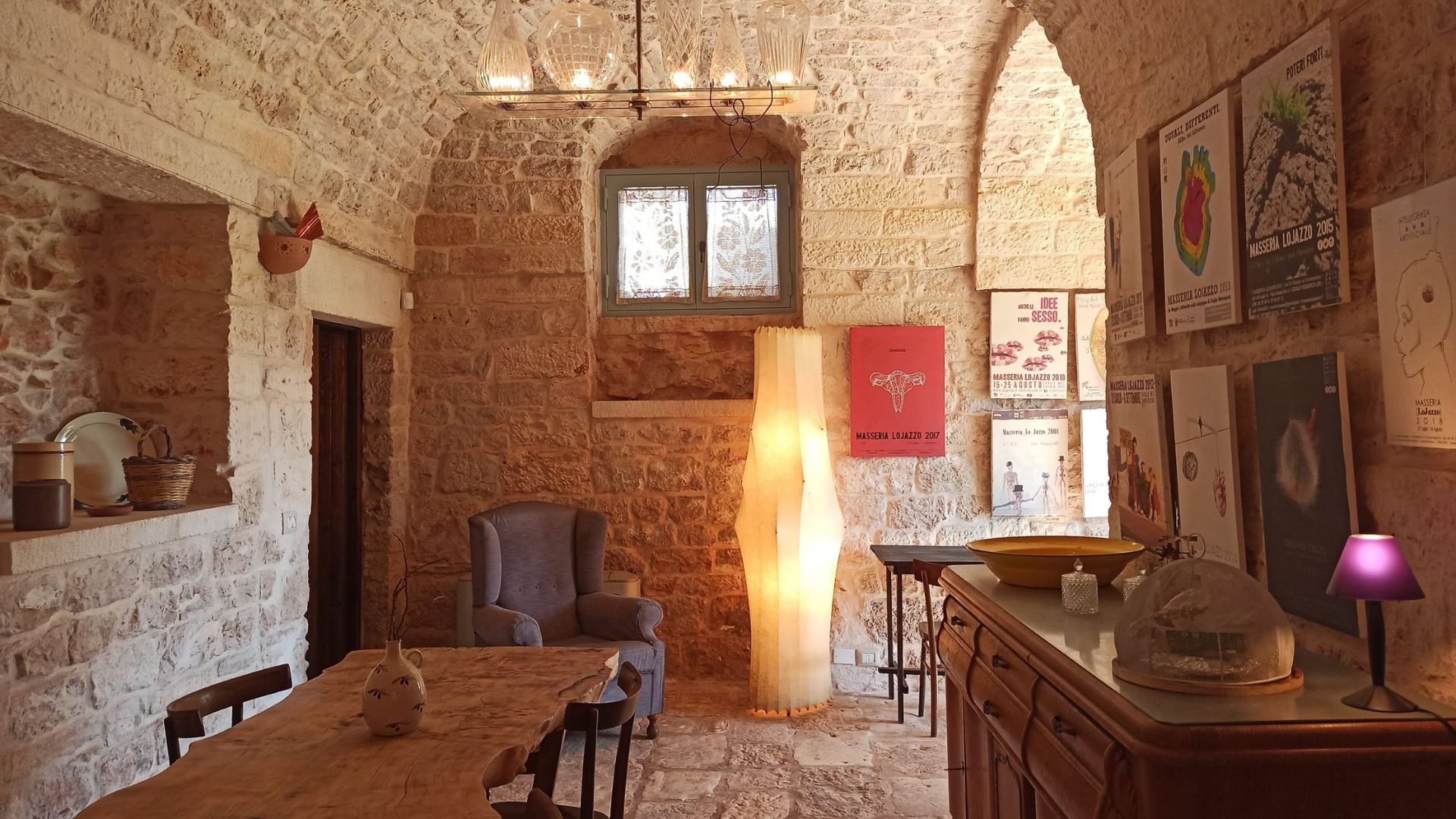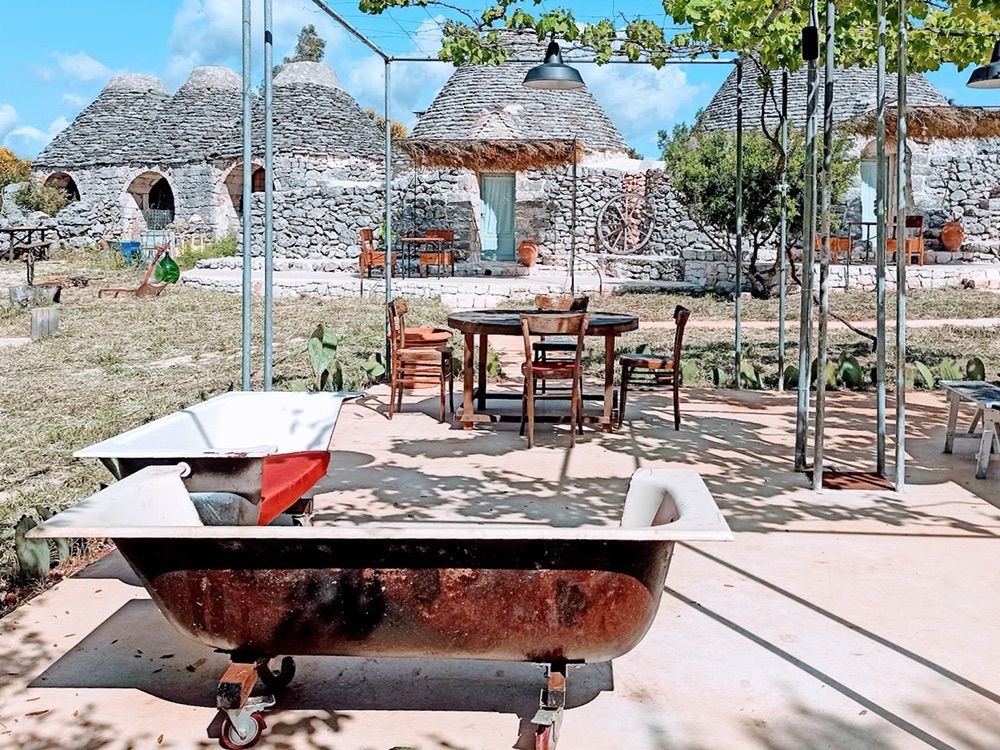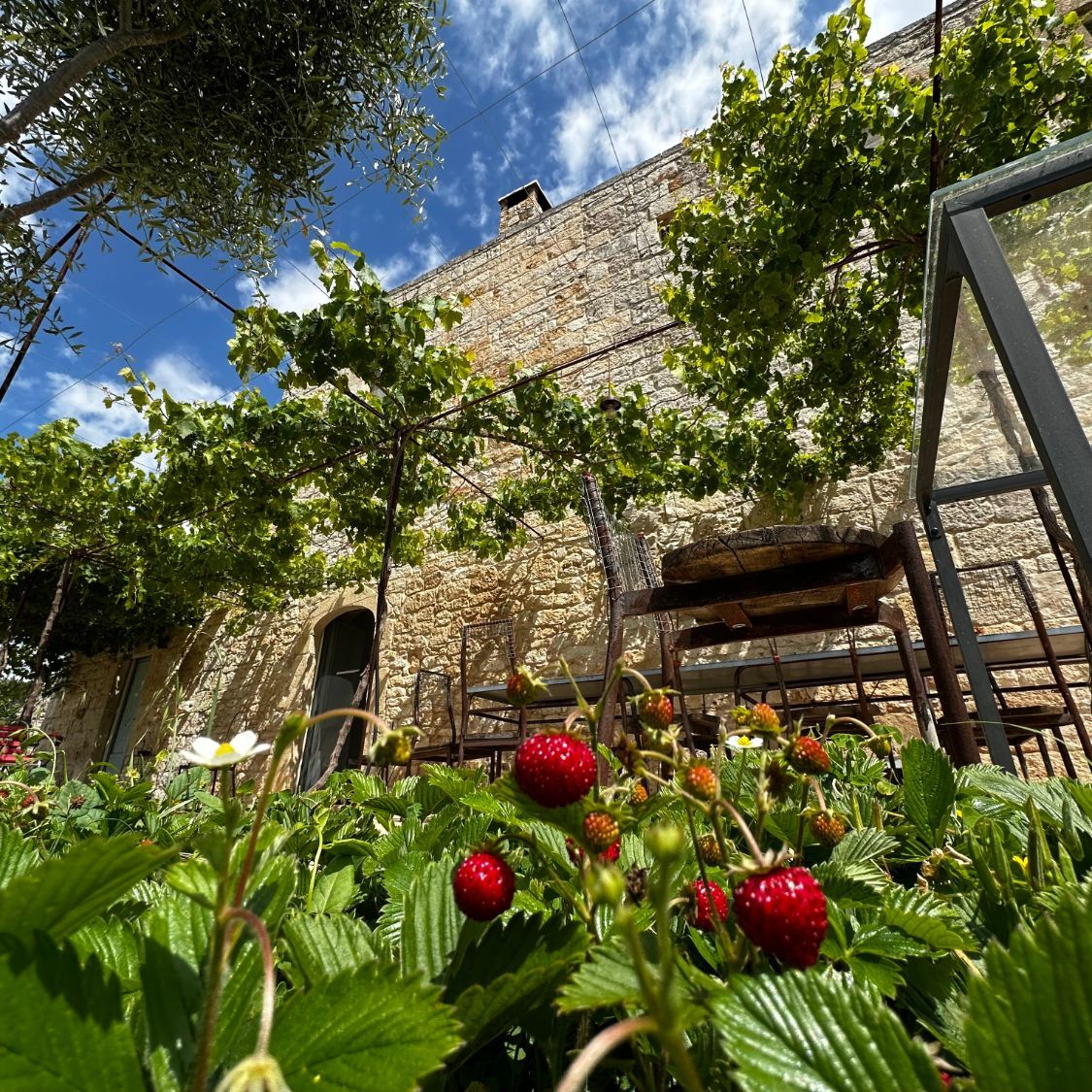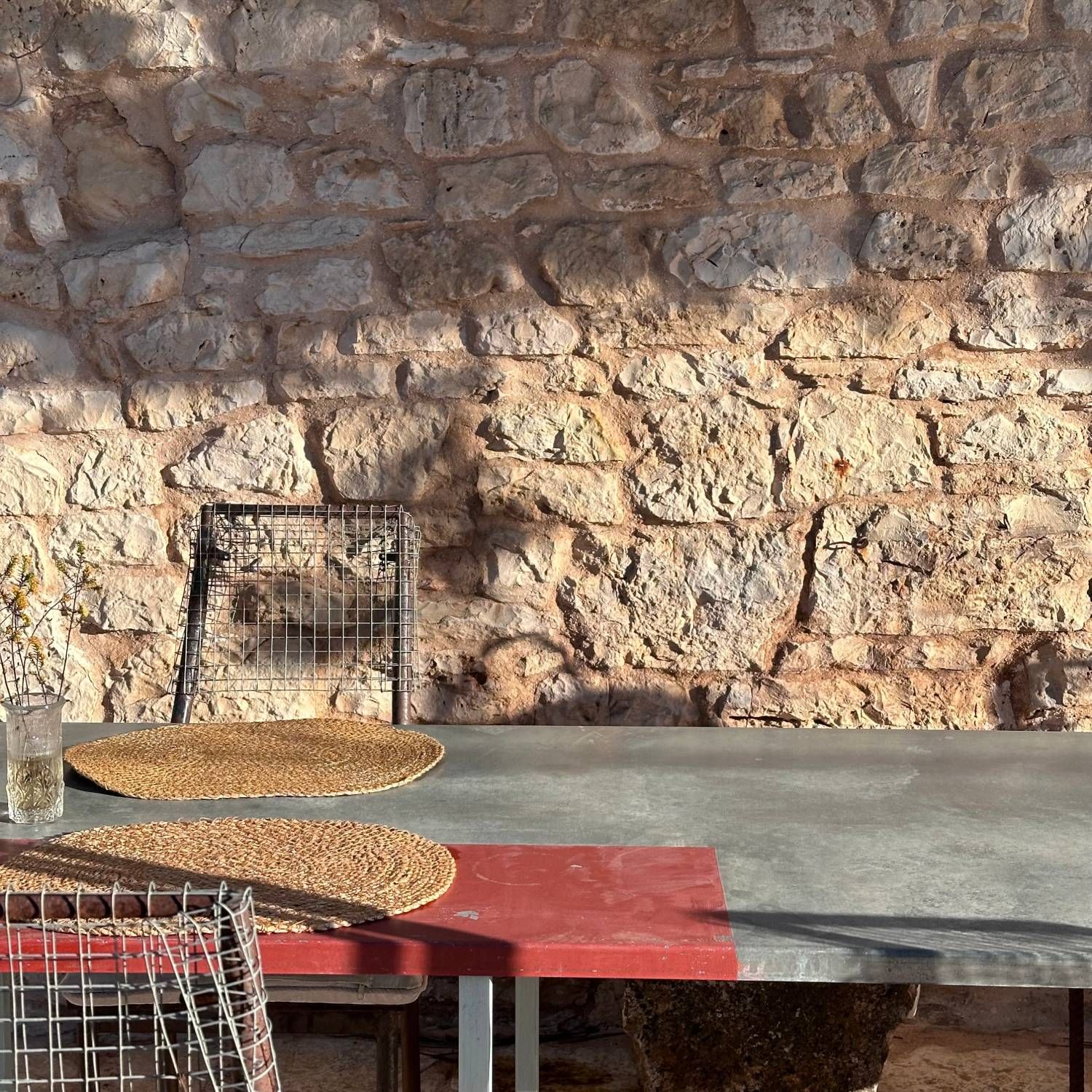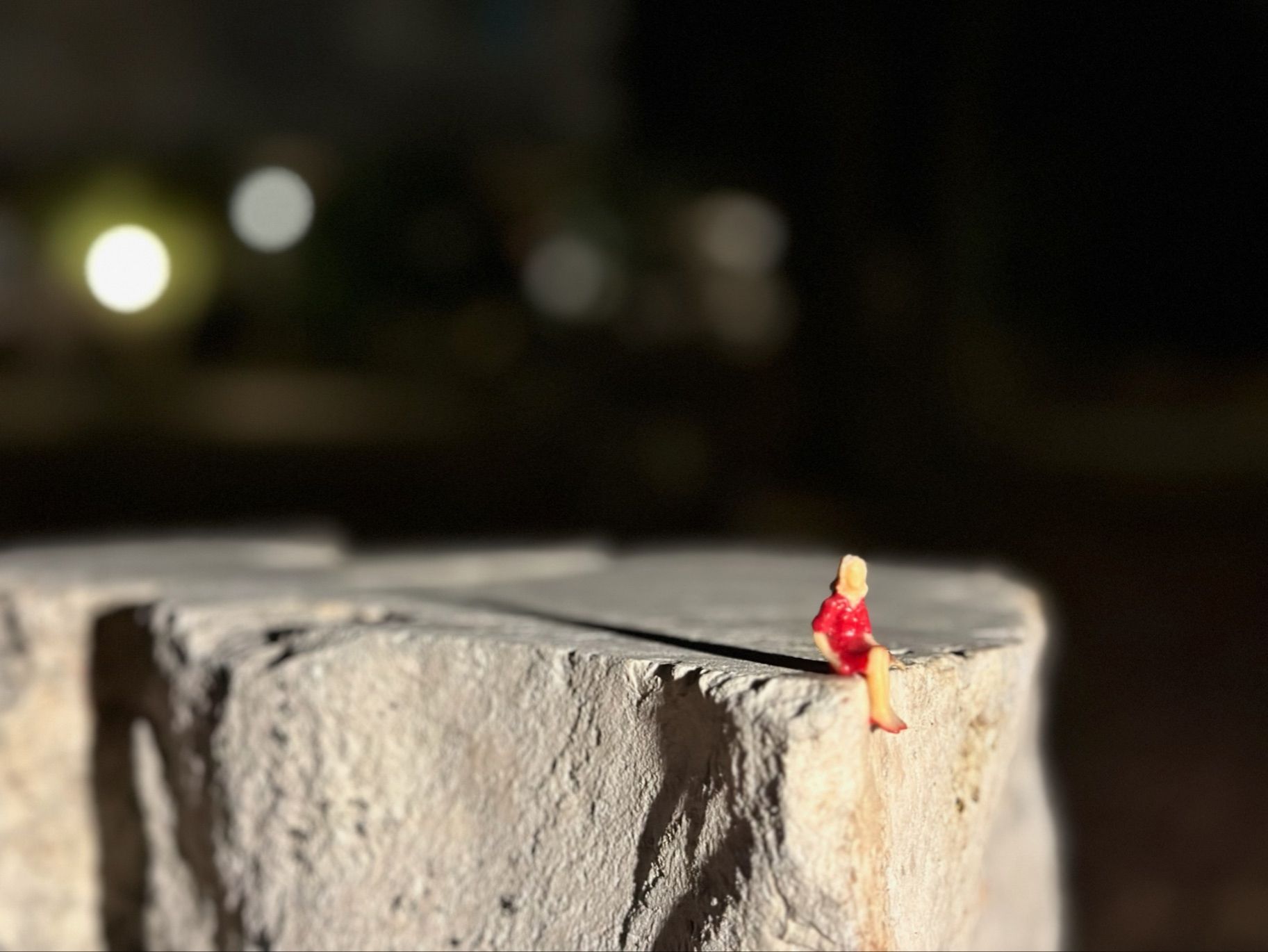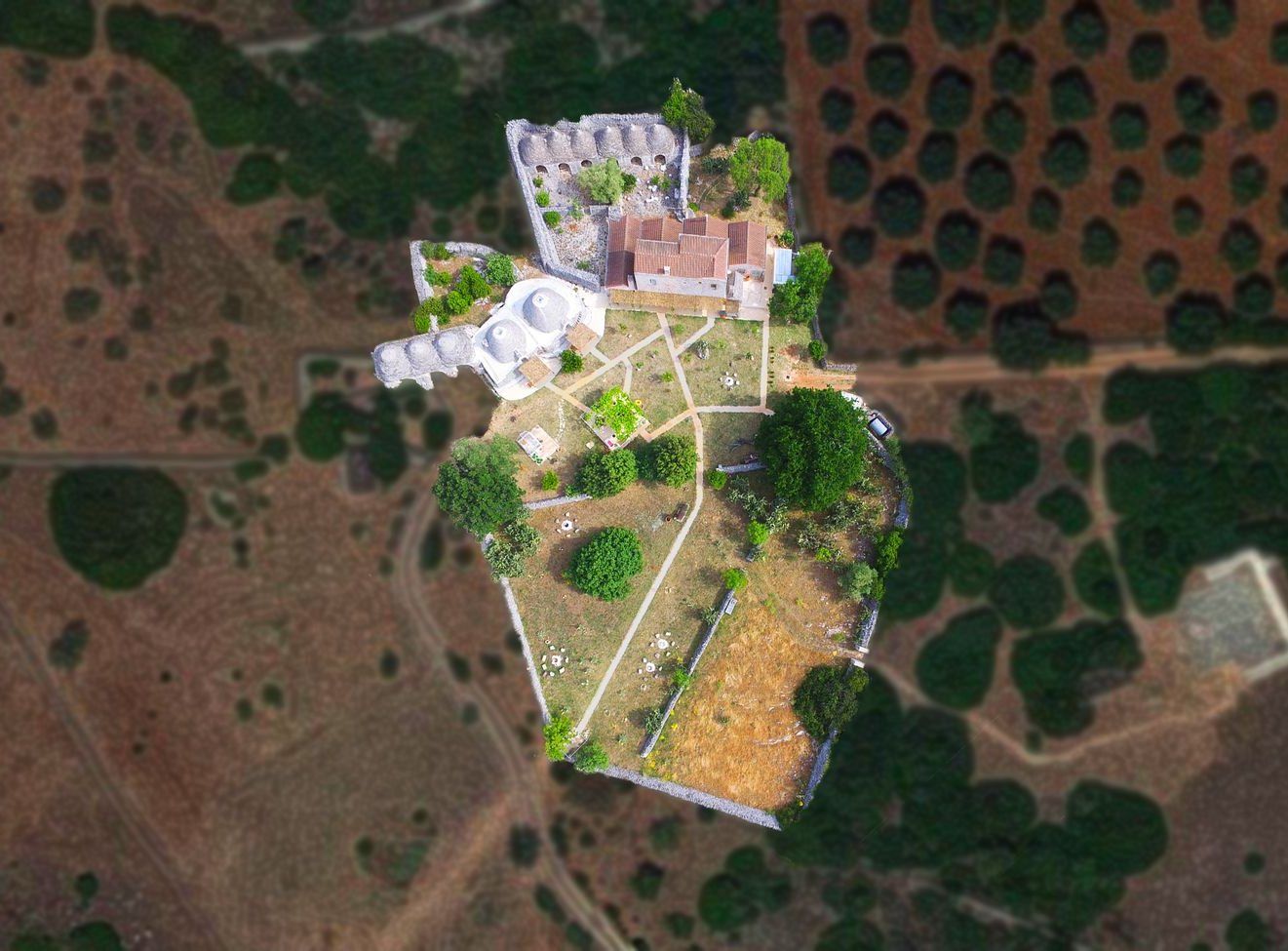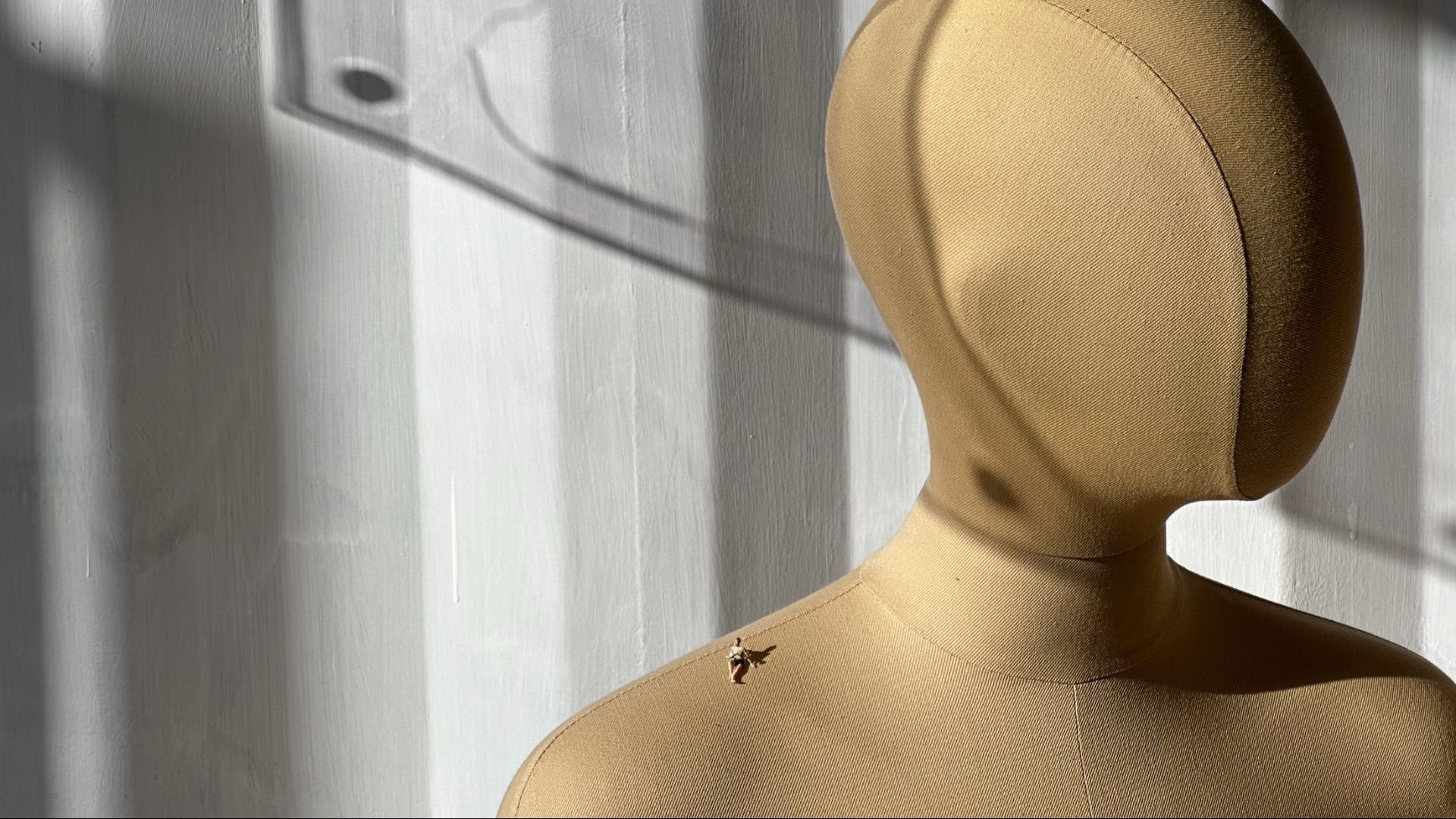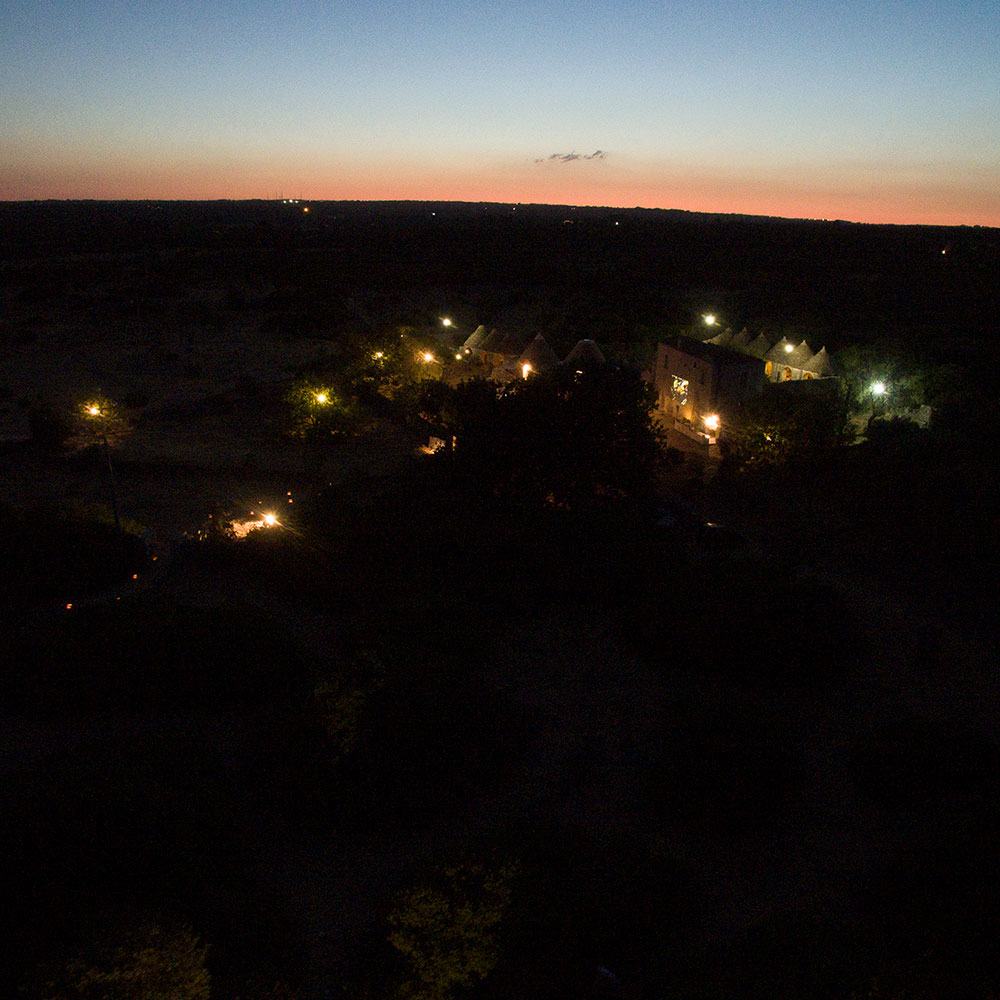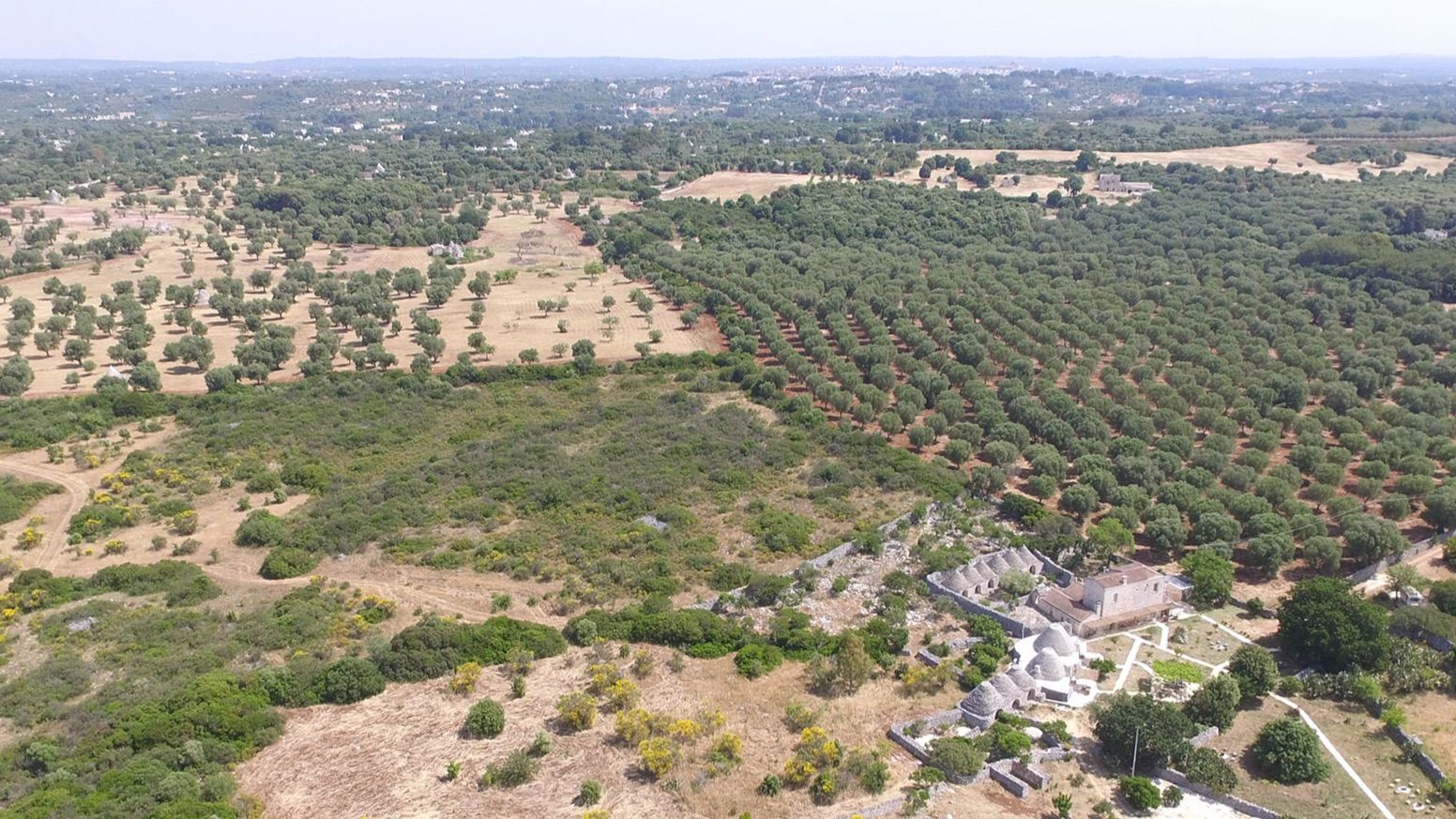
For a few days, a small kingdom is all yours. A kingdom without ceremony, where plants grow as they please, some of them rare, and beauty never strikes a pose. You move gently, so as not to tread on a wild orchid or an inhabitant one centimetre tall: it is the delicacy, more than the space, that makes it large.
For the Romans, otium was not idleness: it was time taken back from business, to think, read, write, talk and learn. Its opposite, negotium, literally “not-otium”, is where English gets the word “negotiate”. This place is made for otium: here you don't switch off from the world, you finally have the time to look at it.

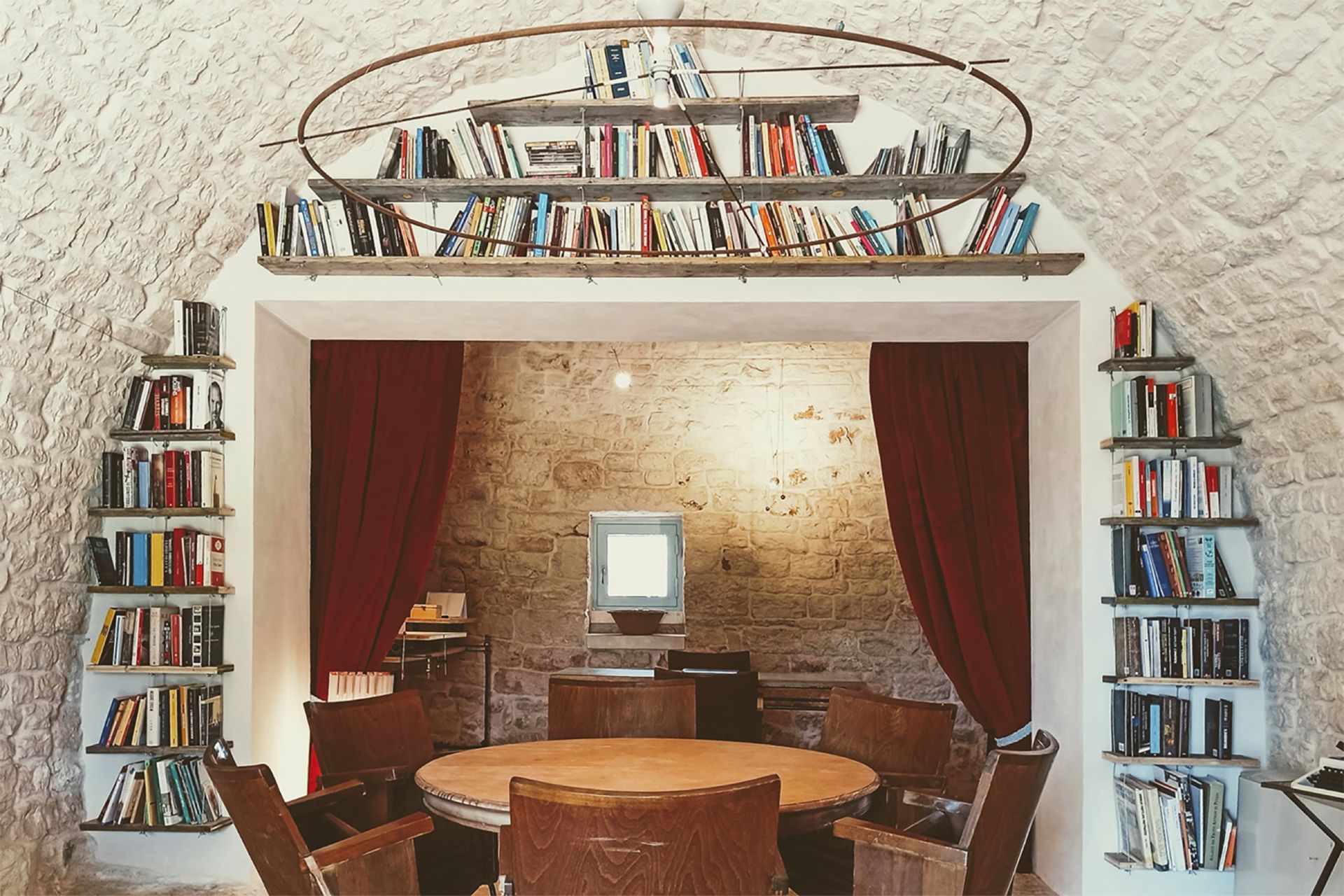
A scarlet curtain, a proscenium that melts into a library, and a great old fireplace. It is the room for reading by the fire and talking late into the night. It is the home of Fibonacci Books.
Read our books →


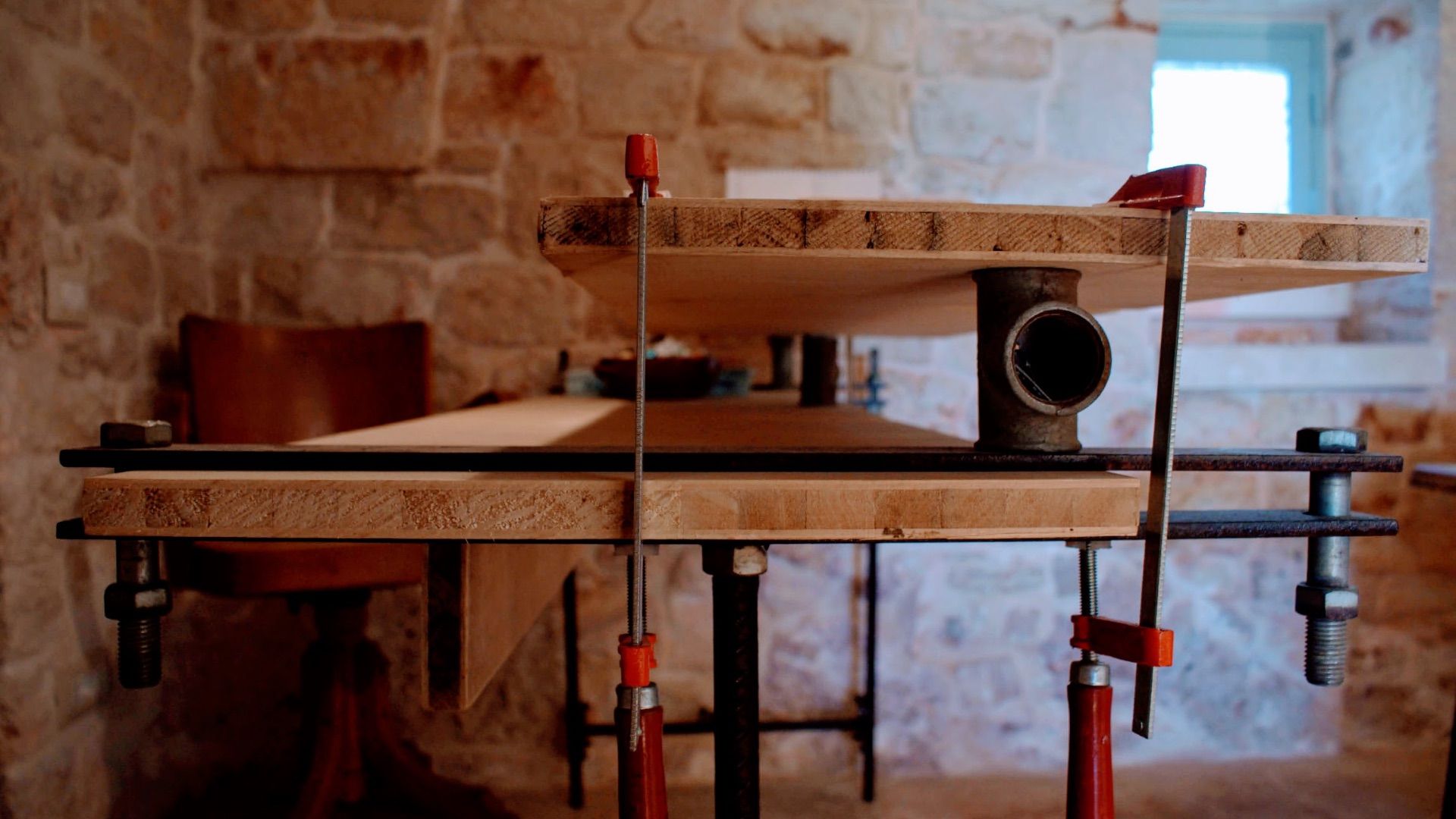
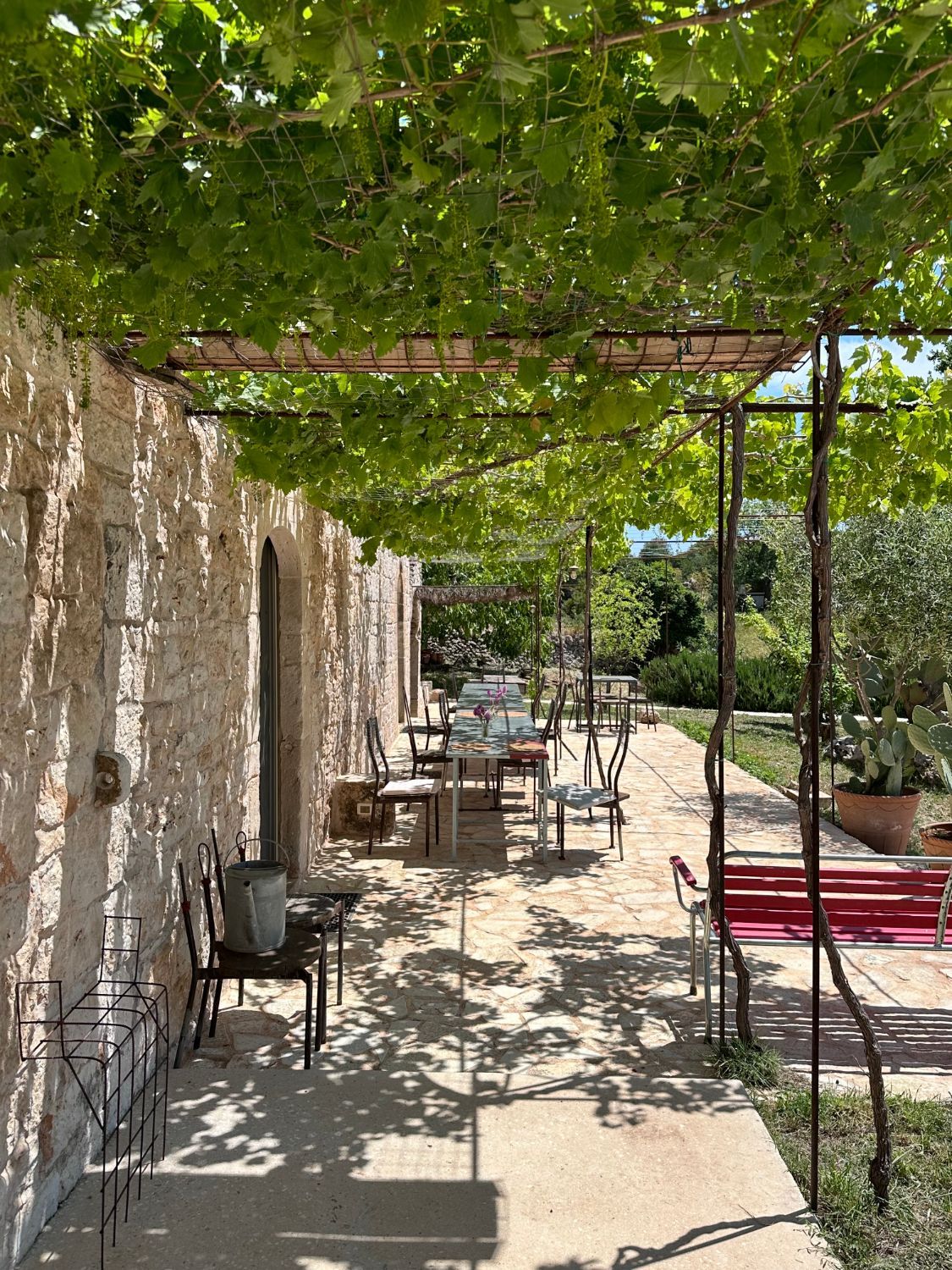
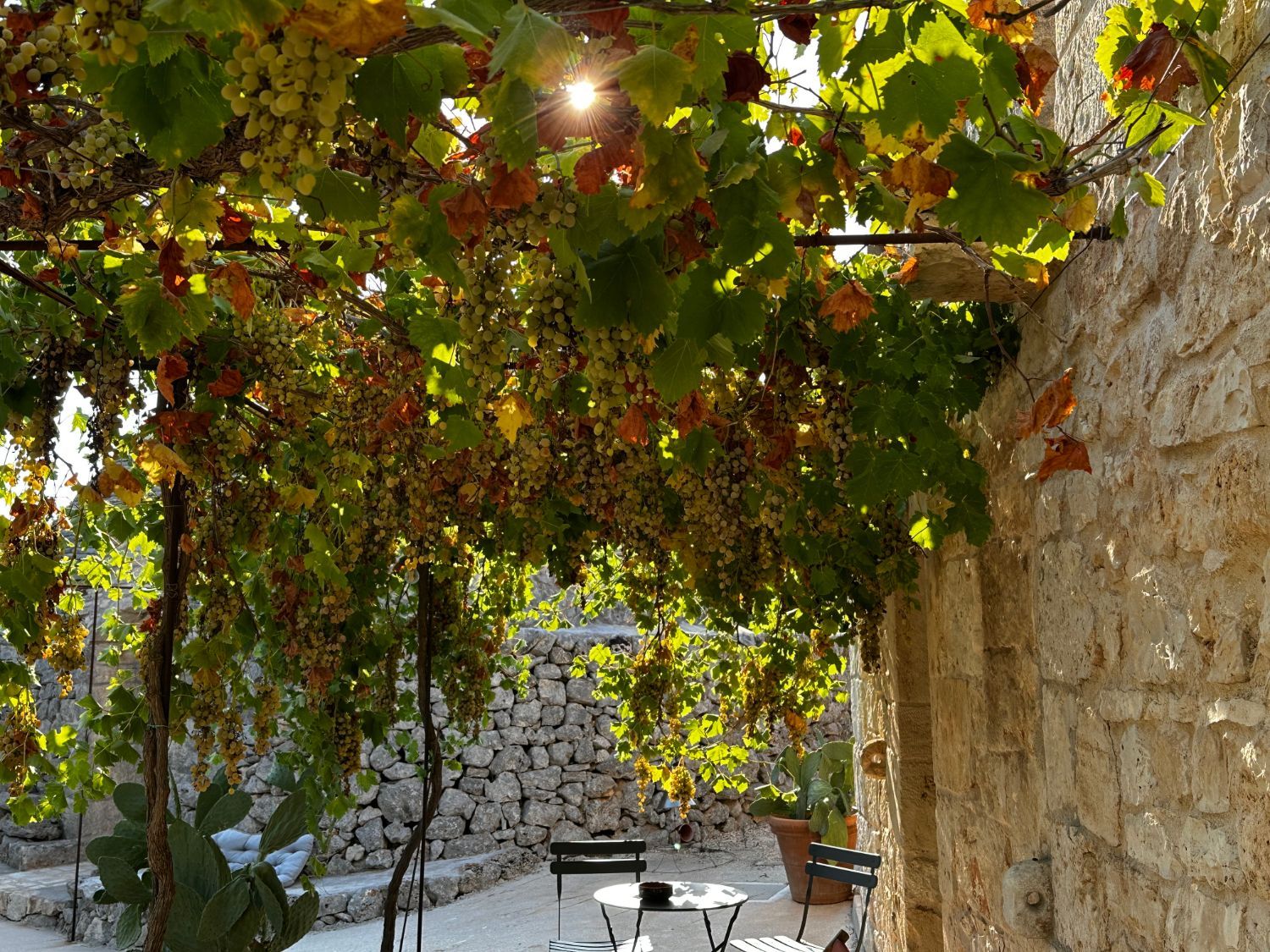
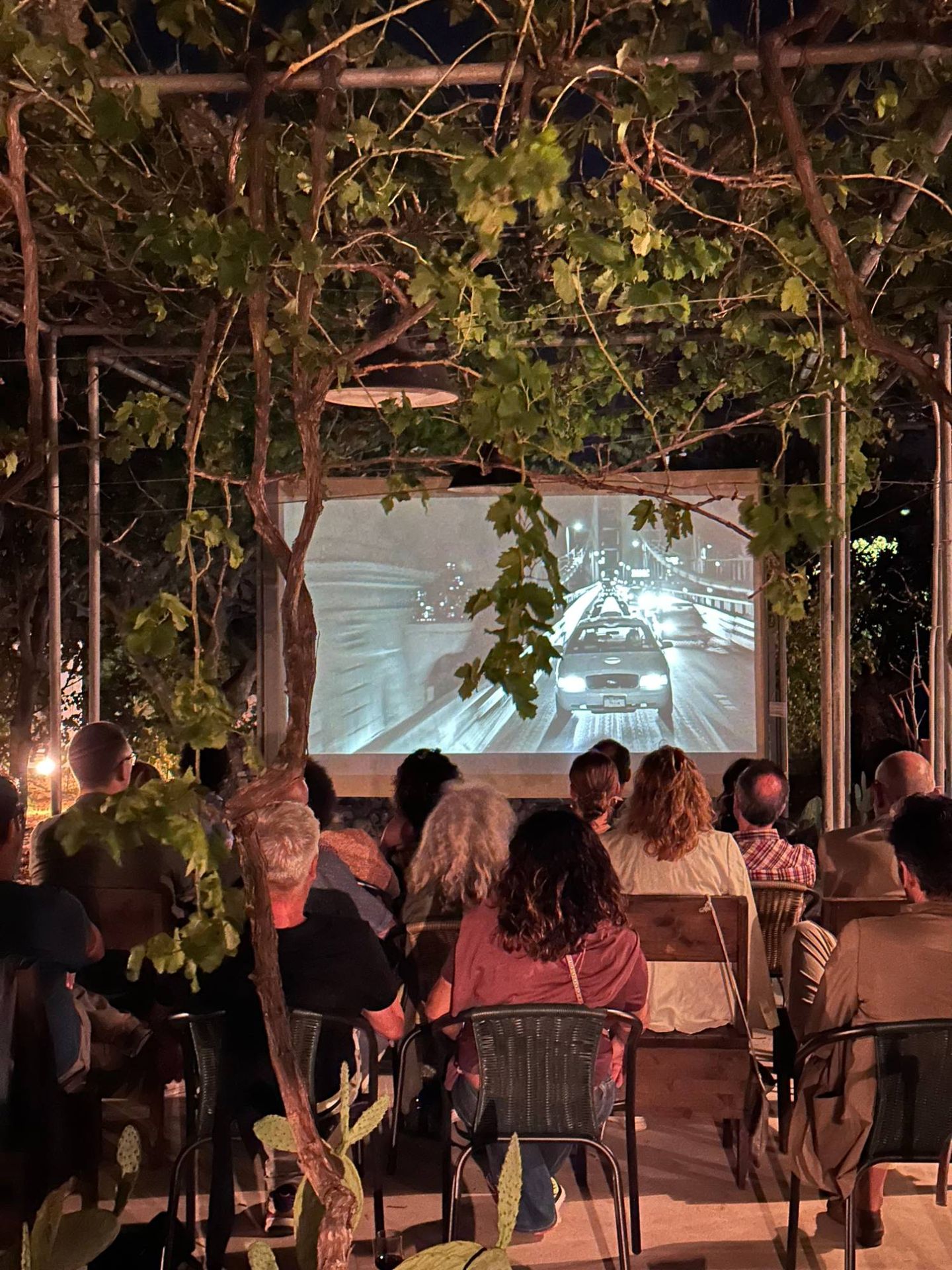
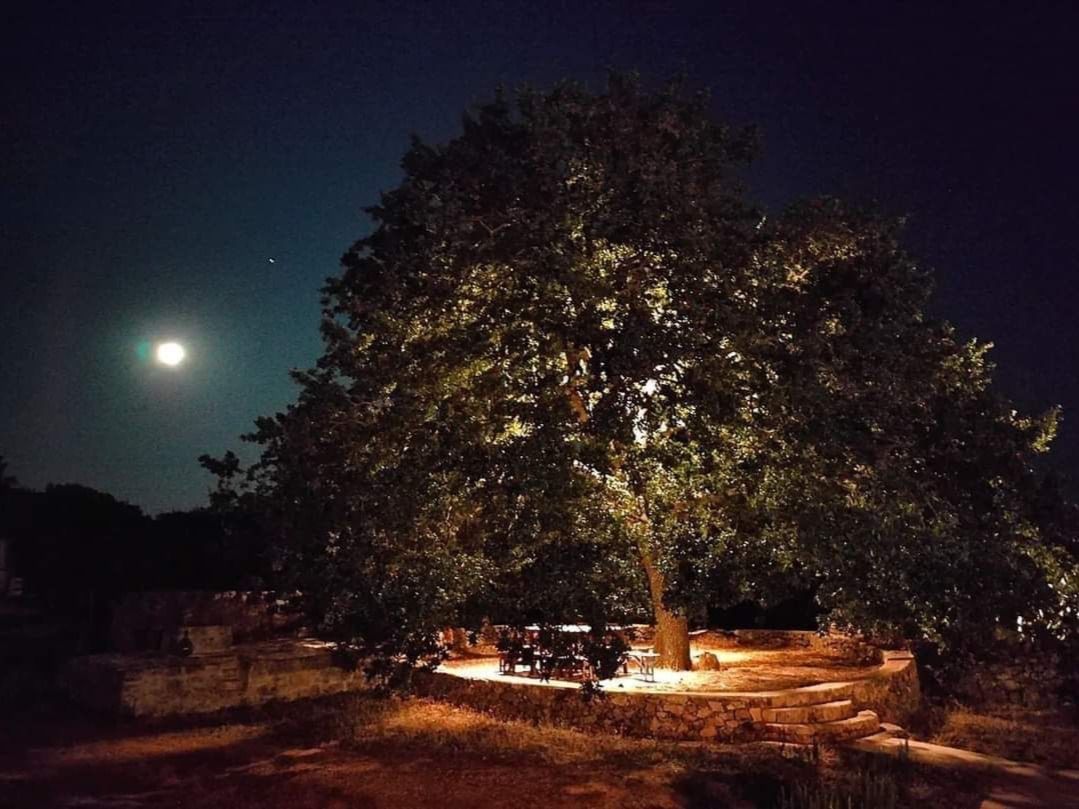
The vine runs along the walls of the masseria and over an iron-pipe pergola in the middle of the meadow: in summer it shades the long tables and the odd chairs, in autumn it fills with grapes. Some evenings a screen goes up underneath, and it becomes a cinema.


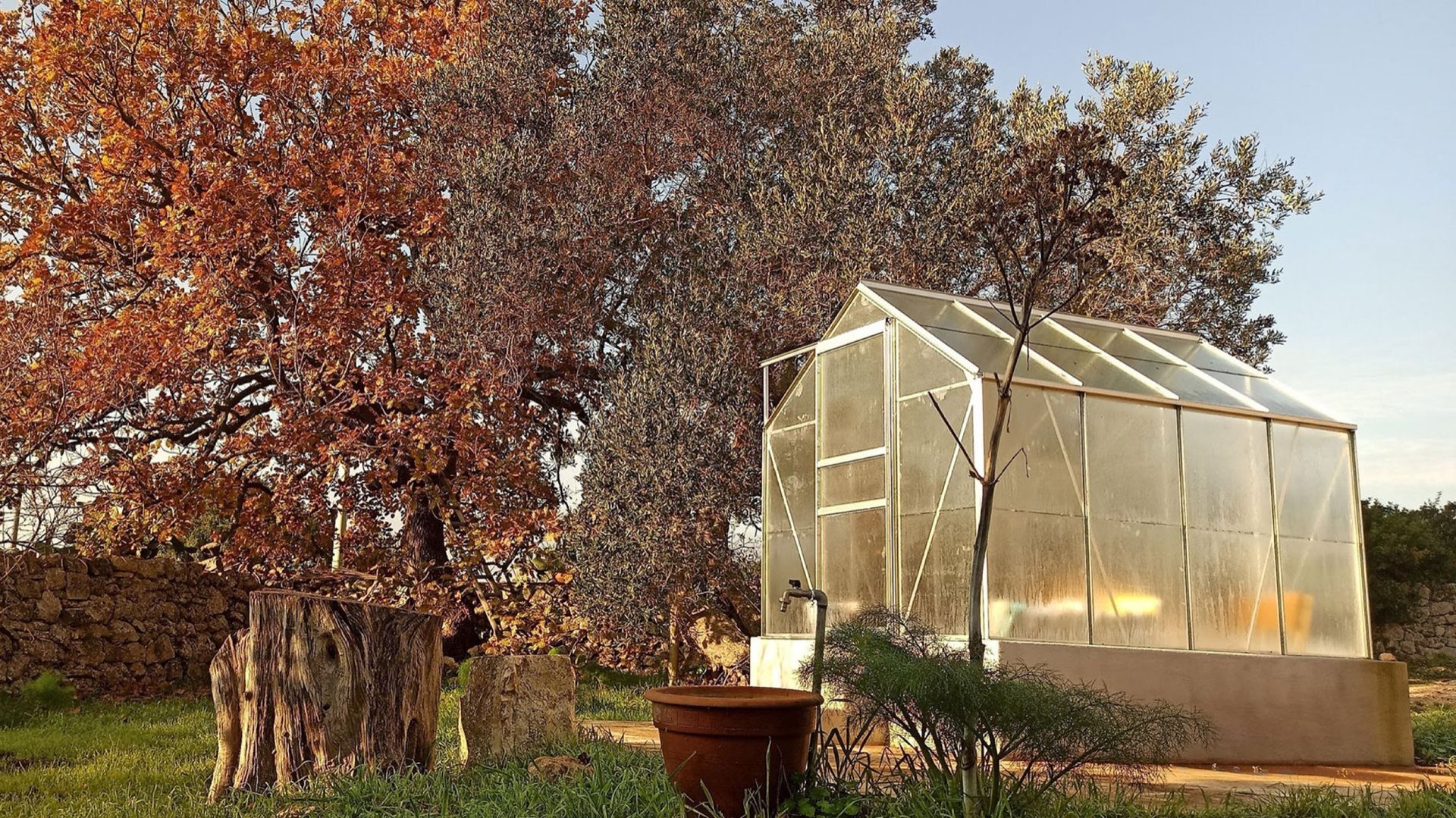
Glass and iron, like a real greenhouse; inside, reading. This is where the heteronyms took their first steps, before Fibonacci Books, the press born here, published them.
Fibonacci Books →
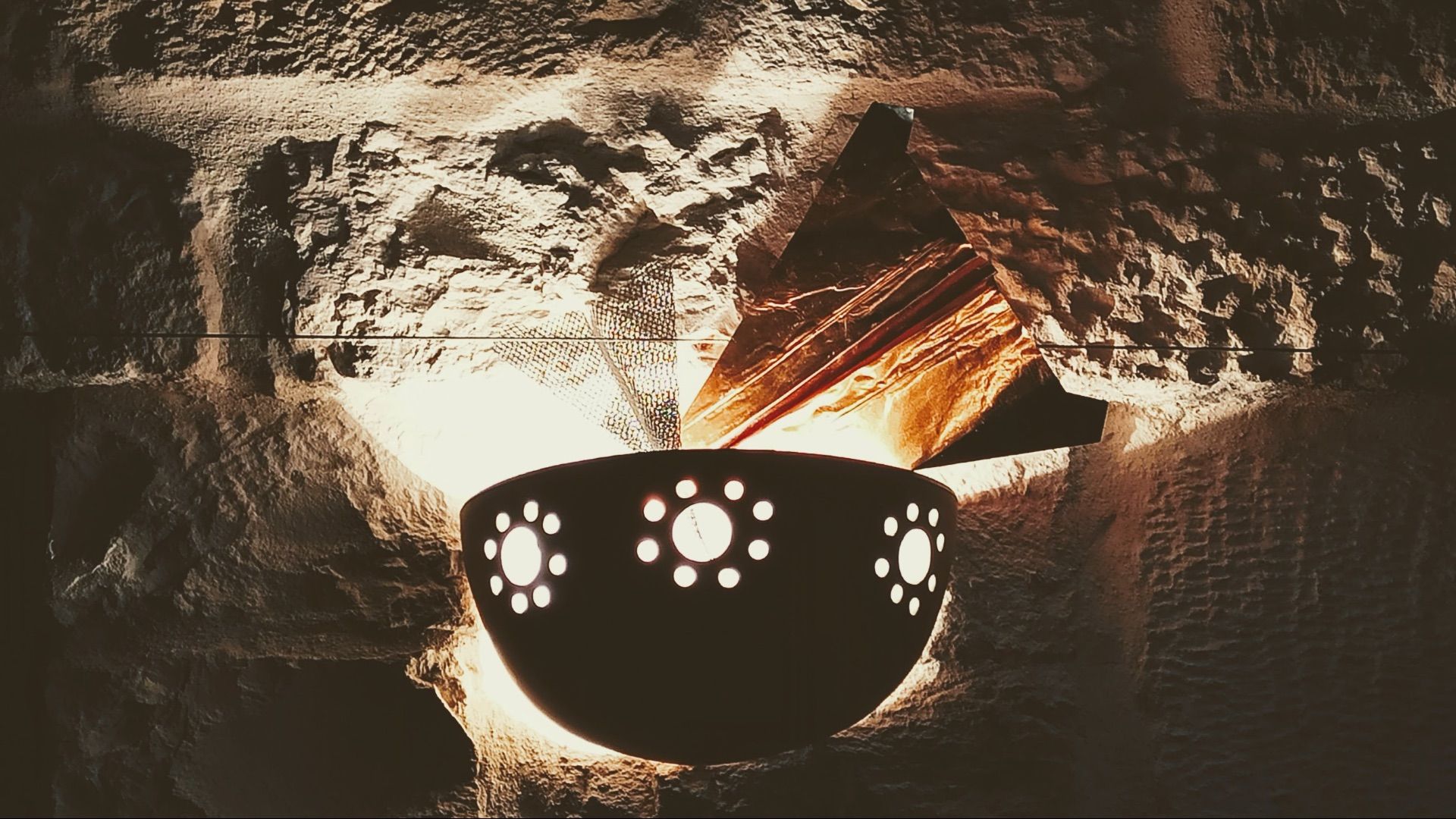
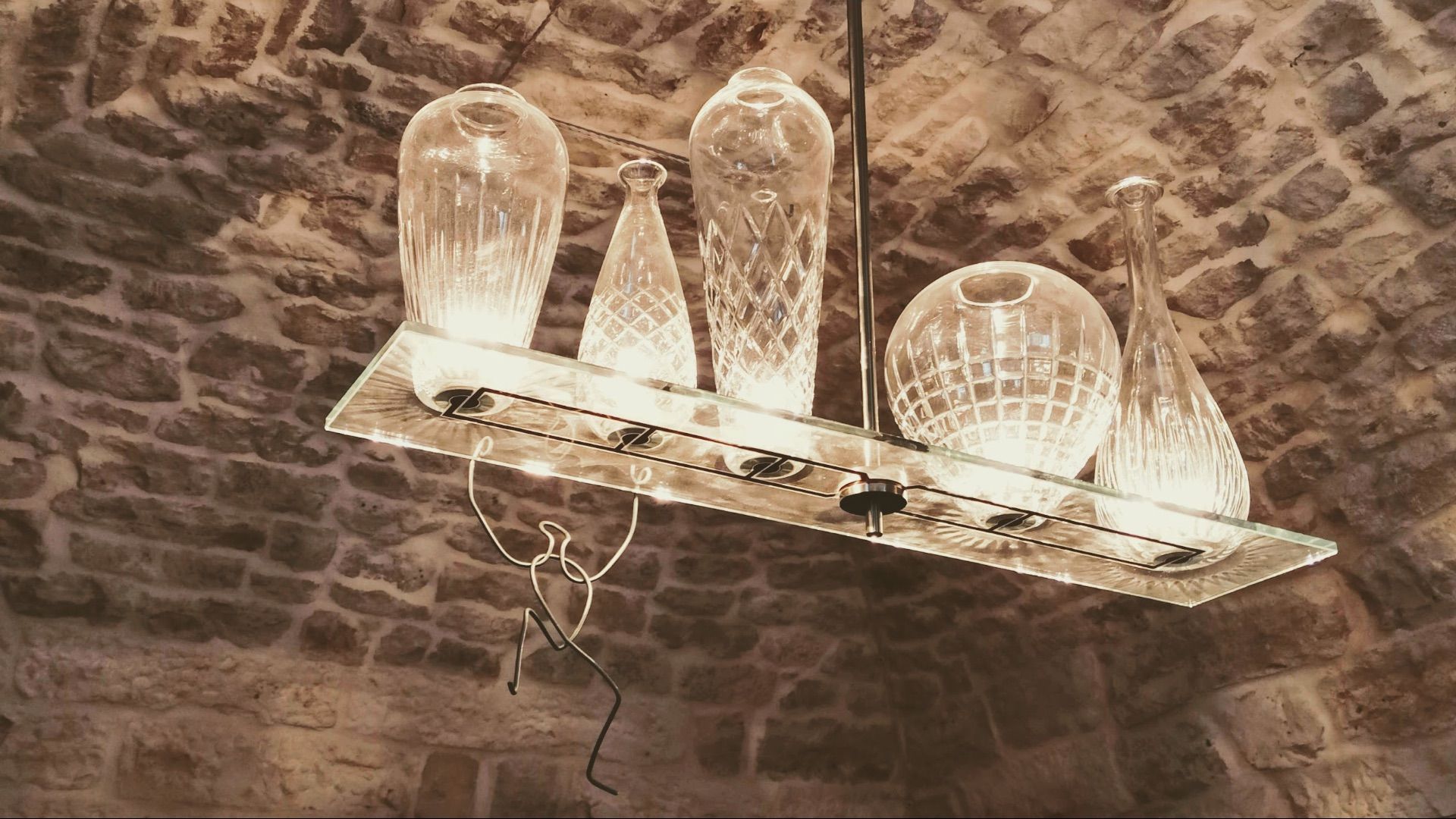
The ancient Romans had two kinds of household gods: the Lares, bound to the place, and the Penates, bound to the family. The Lares stayed in the same place for ever; the Penates followed the family when it moved. In De agri cultura, Cato advises the master, as soon as he arrives, to win the favour of the household Lares. In Plautus’ Aulularia it is a Lar who tells the story: for generations he has known where the family hides its gold. Every house had its own; the Jazzo has them too. Nicola and Domenica decided to pay them homage by giving them form. Keep your eyes open: if you look closely, you might spot them…
A rock has a door, a fig holds a square, a book is a museum. Whoever has been here tells it differently every time: one remembers one thing, another something else, because the layers and details are many, and each person finds their own. Many things here exist only when someone truly looks at them. Duchamp put it this way: it is the onlookers who make the pictures.
in your small kingdom.
Book