Design · Masseria LoJazzo
Here, things take up a new trade.
A bathtub becomes a sofa, a brick a cushion, a sheet of paper a lamp. Nicola draws them and builds them here, with what there is, and a few extras...
A bathtub becomes a sofa, a brick a cushion, a sheet of paper a lamp. Nicola draws them and builds them here, with what there is, and a few extras...
Paul Valéry called the poem a prolonged hesitation between sound and sense. Something similar holds for design: it is a hesitation between use and utopia. Giving objects a new function means daring to imagine new worlds. All in all, the gestures are always the same: sitting, walking, lying down, switching on the light... But when the object changes, for a moment you savour that gesture as if you were making it for the first time.
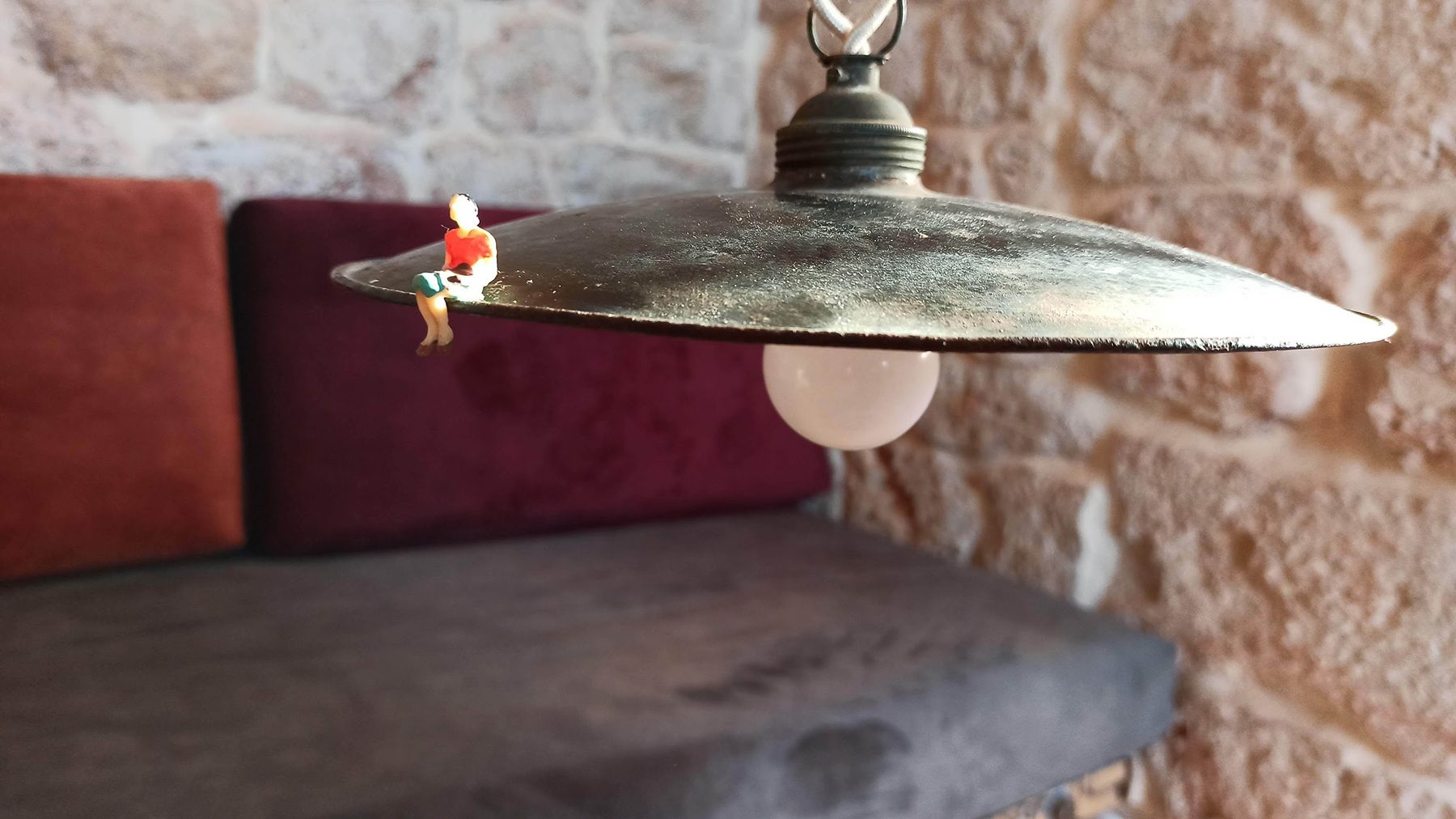
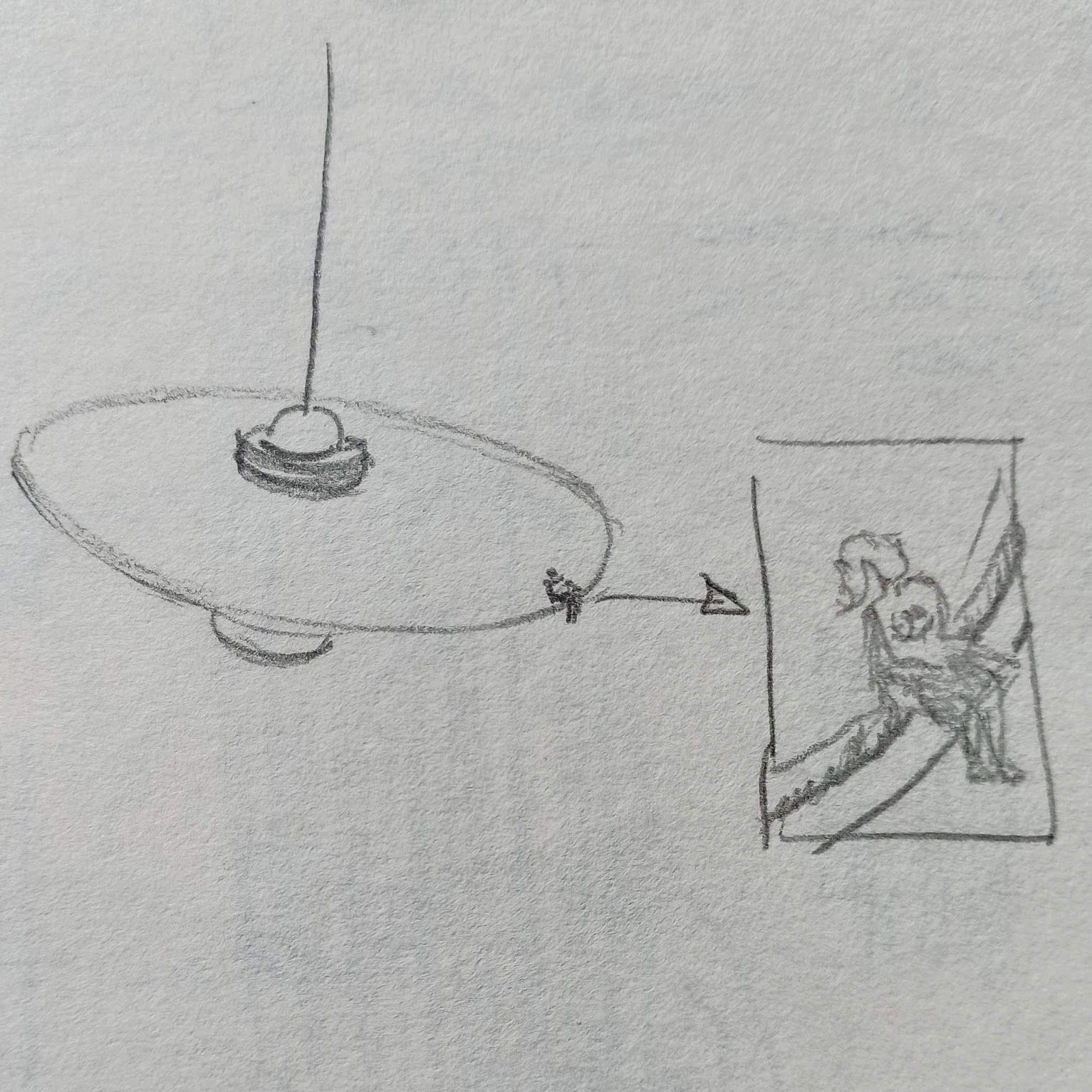
A salvaged lamp and, sitting on its rim, a miniature woman who seems to contemplate the space, wait for someone, meditate. And suddenly it’s Hopper.
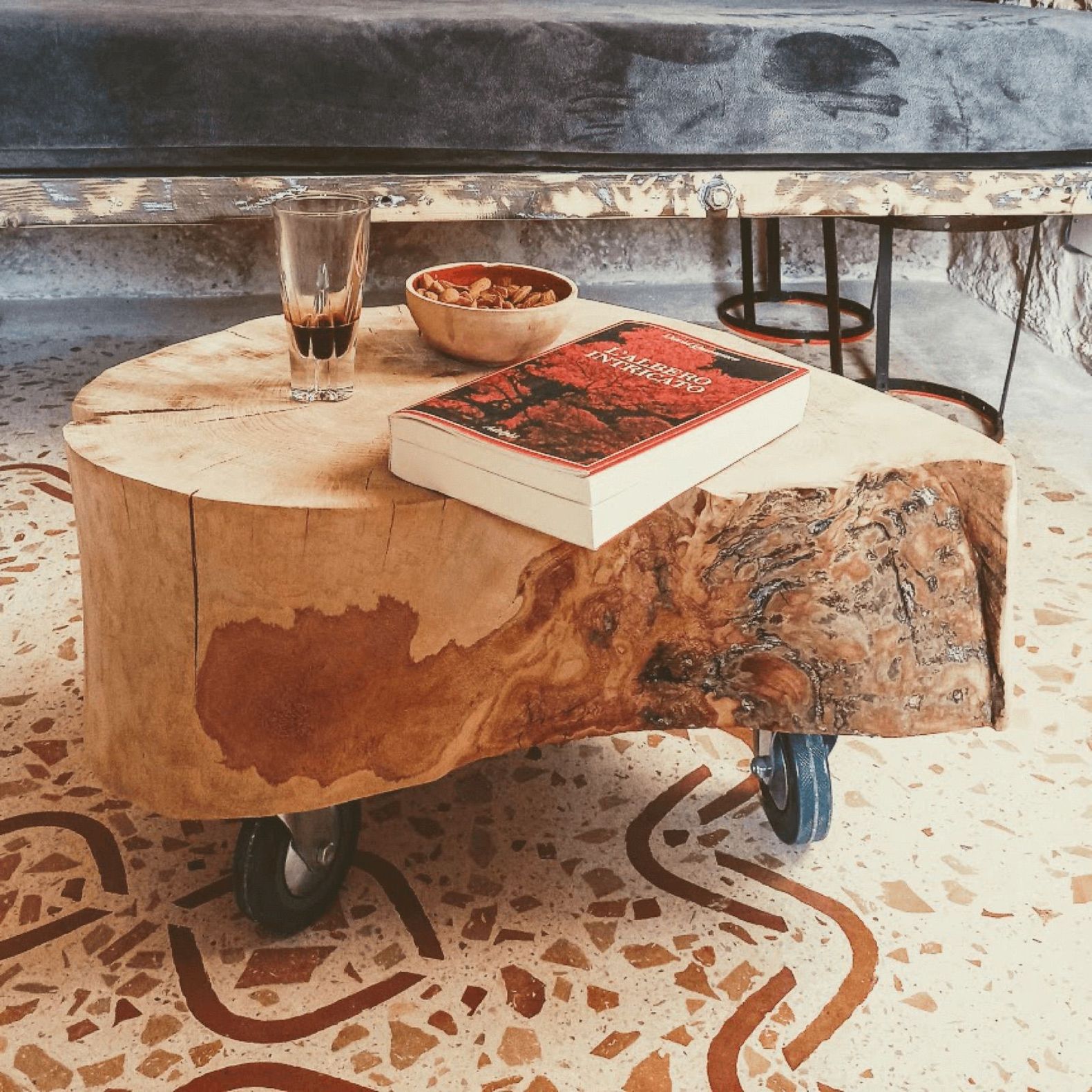
A trunk cut clean, bark and cracks left where they were, and workshop wheels underneath. A table for meditating, which nonetheless travels.
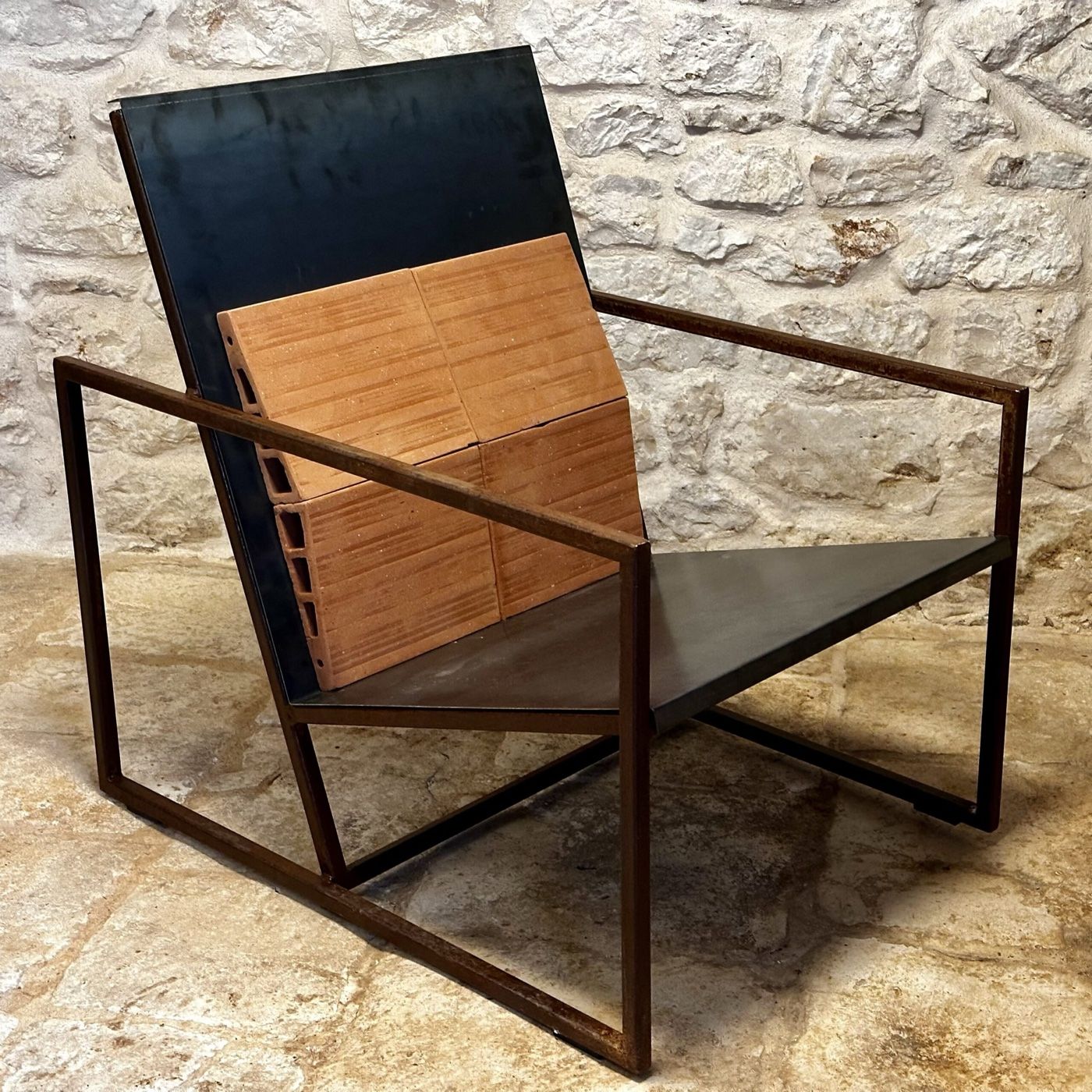
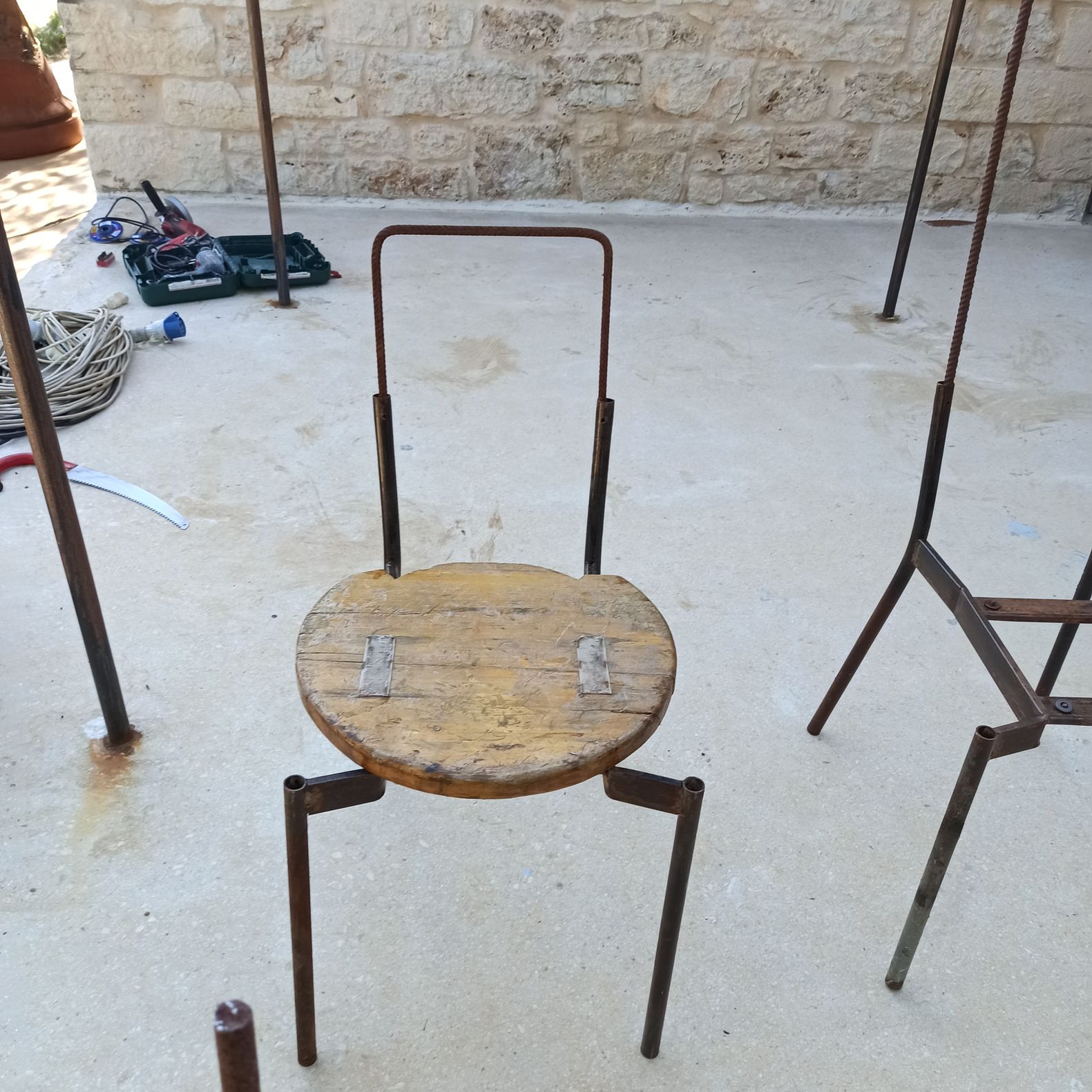
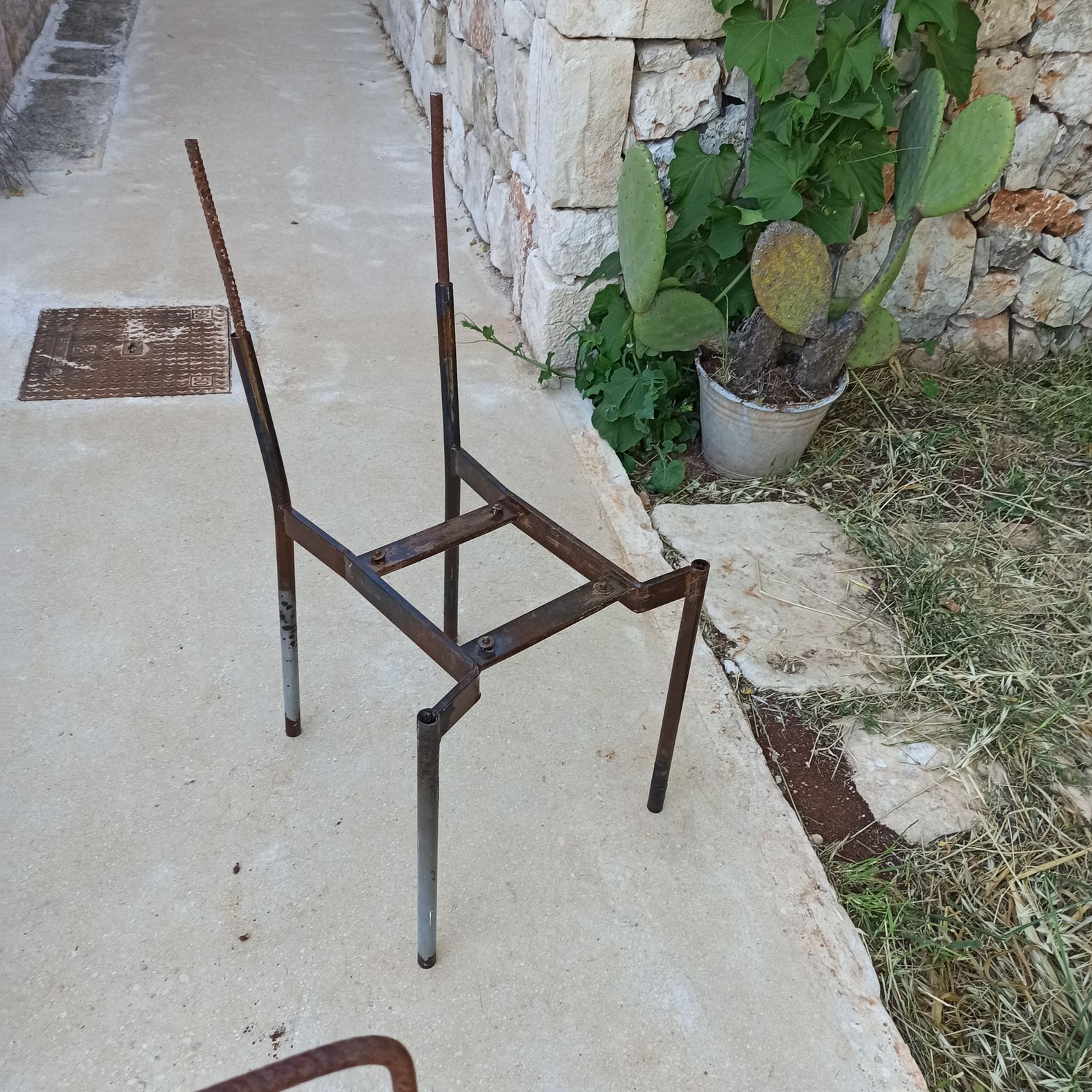
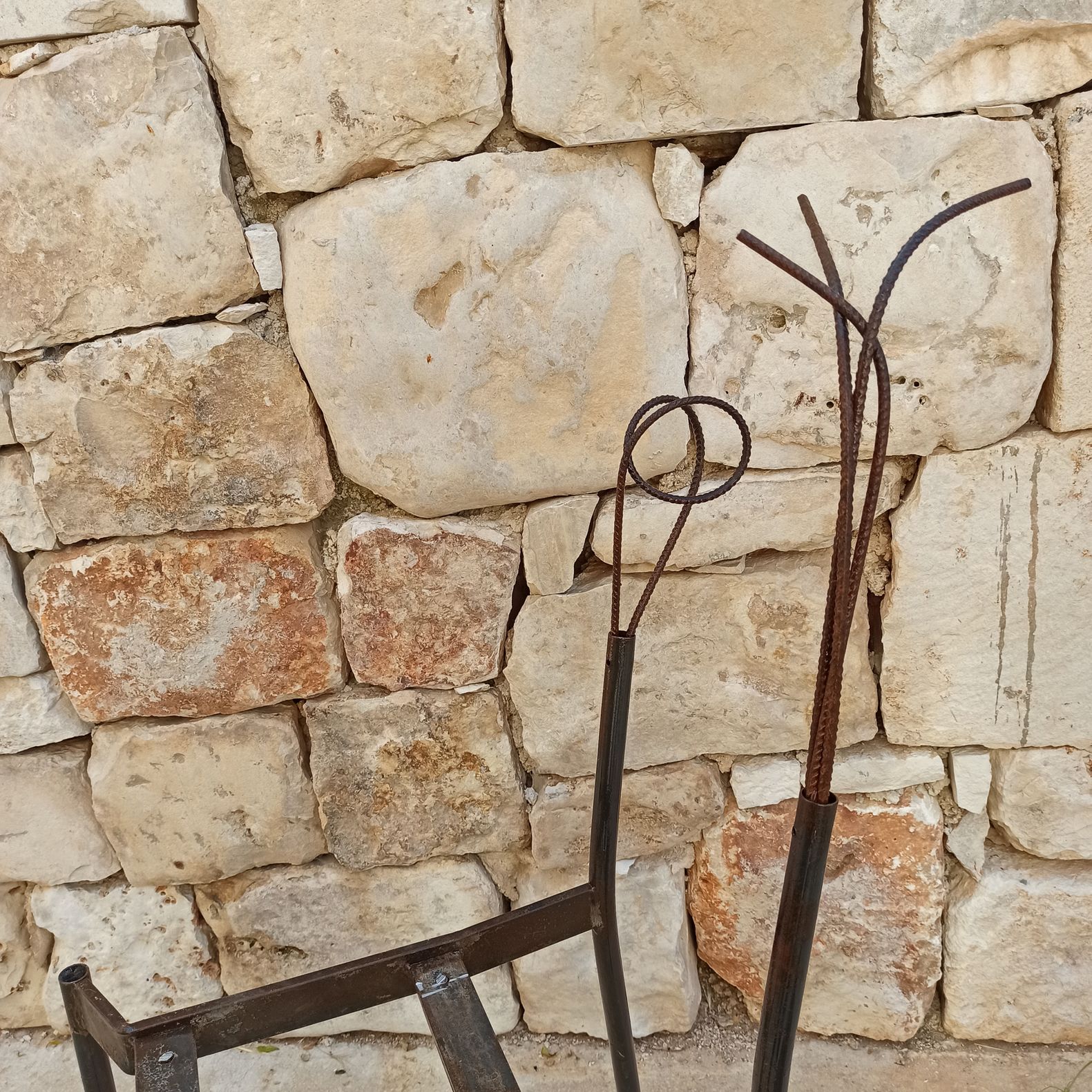
An iron frame, sheet metal, and for cushions, bricks. Revenant: the one who comes back.
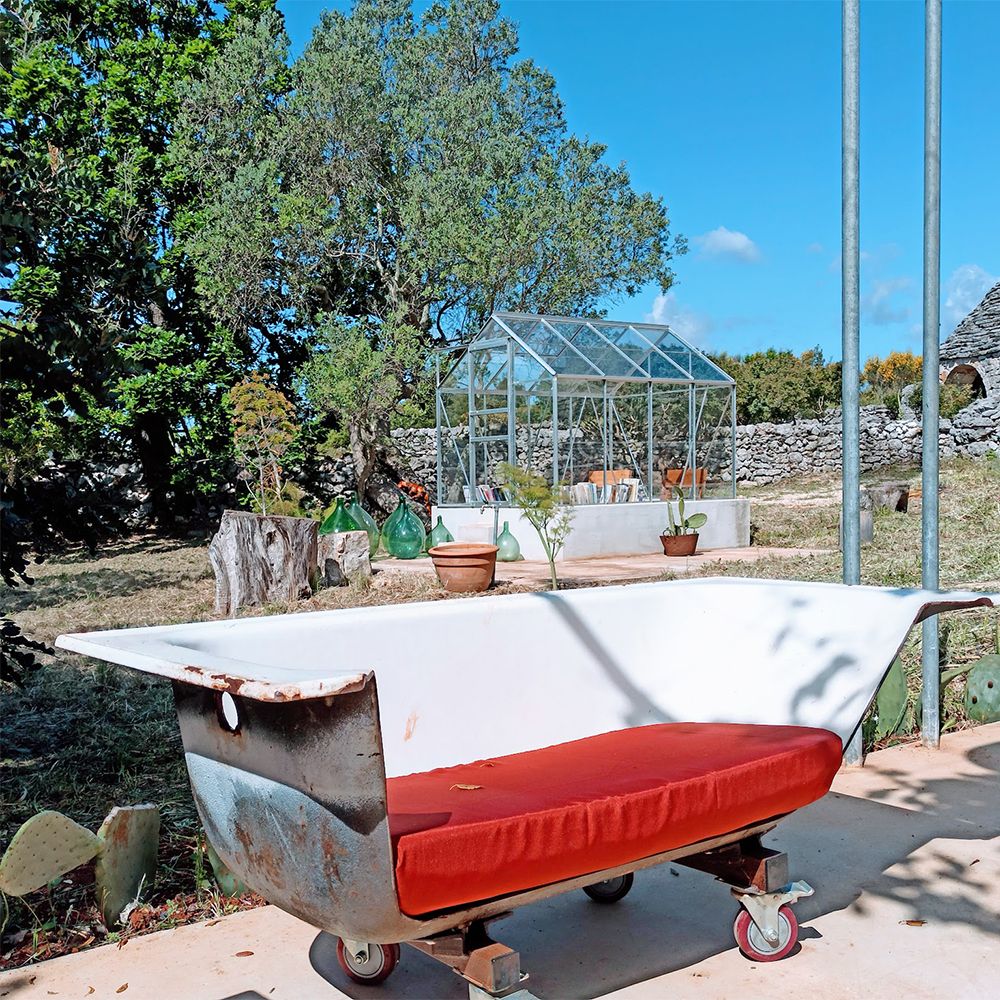
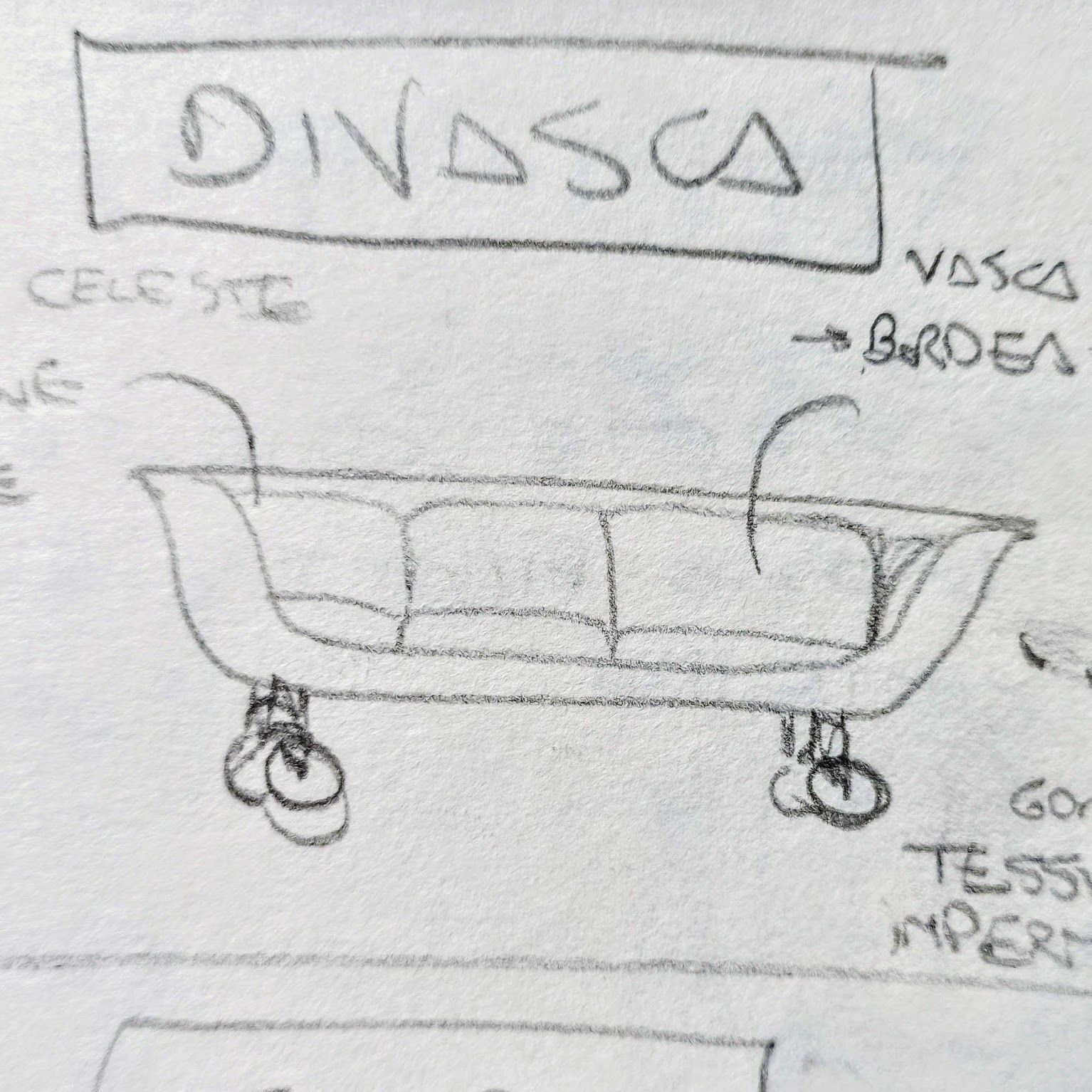
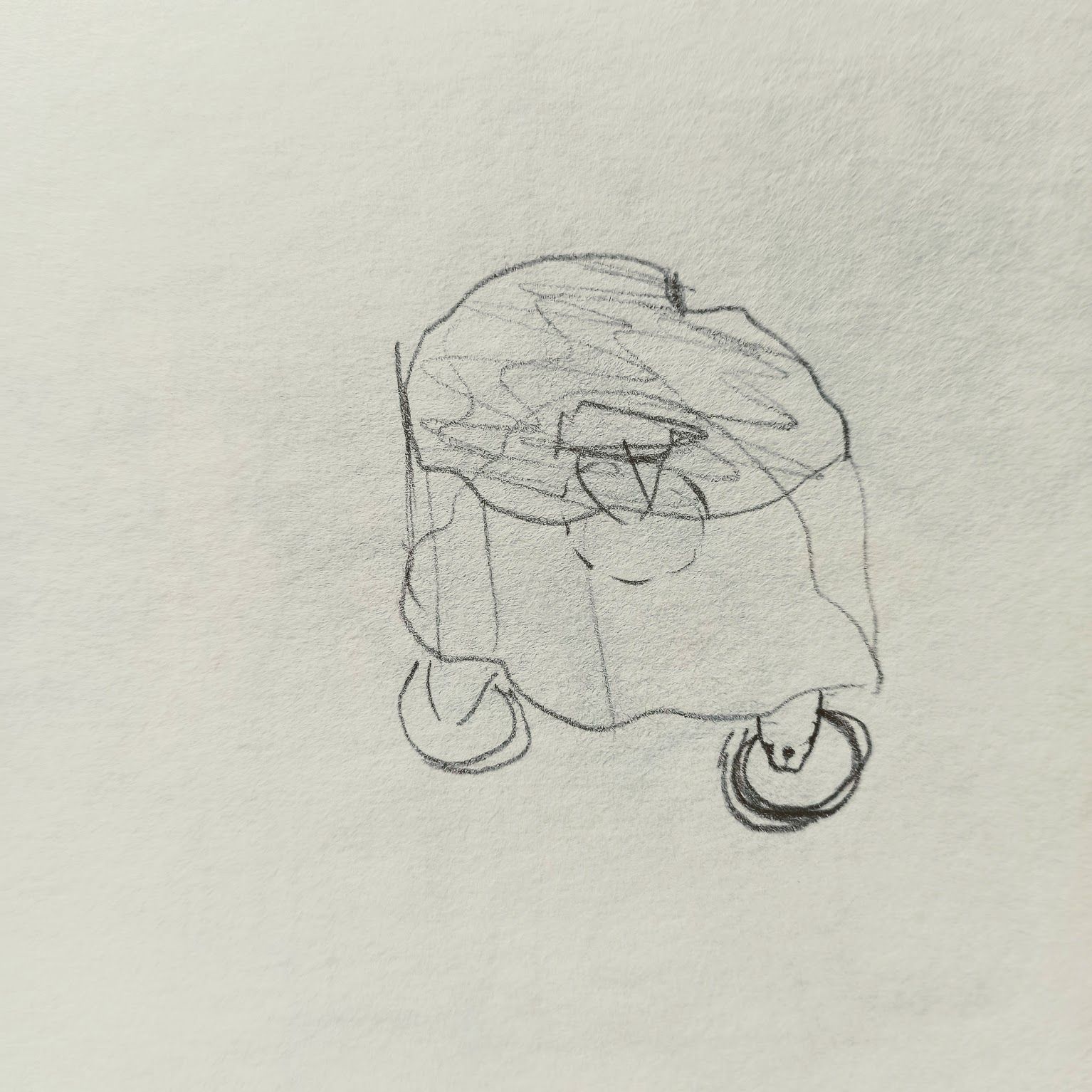
It was a bathtub. Now it has a red cushion, four wheels, and goes out to sunbathe in the garden.
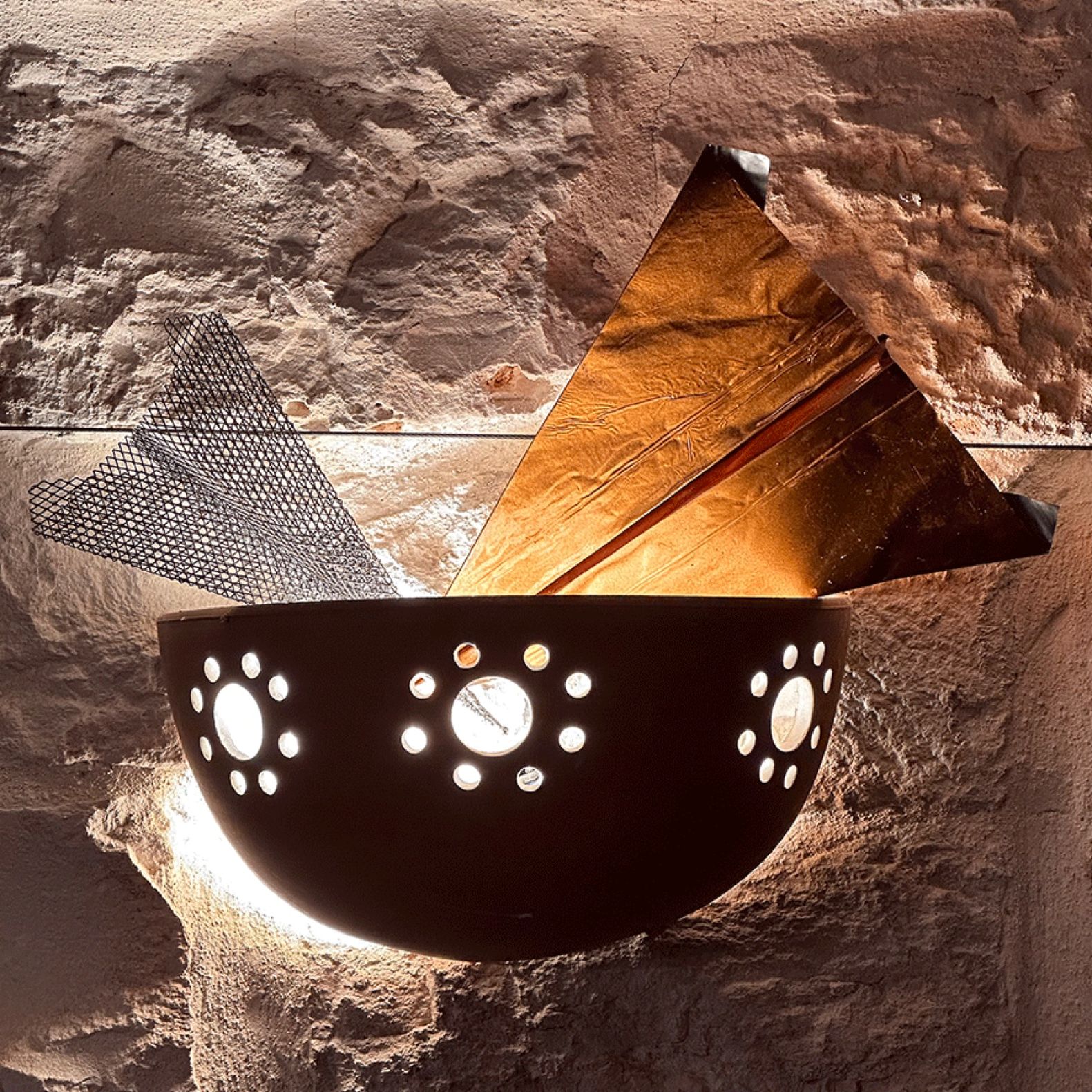
Two paper aeroplanes plunge into an iron half-dome pocked with craters. No harm, no tragedy: the light pours out of the holes and settles on the wall like a constellation.
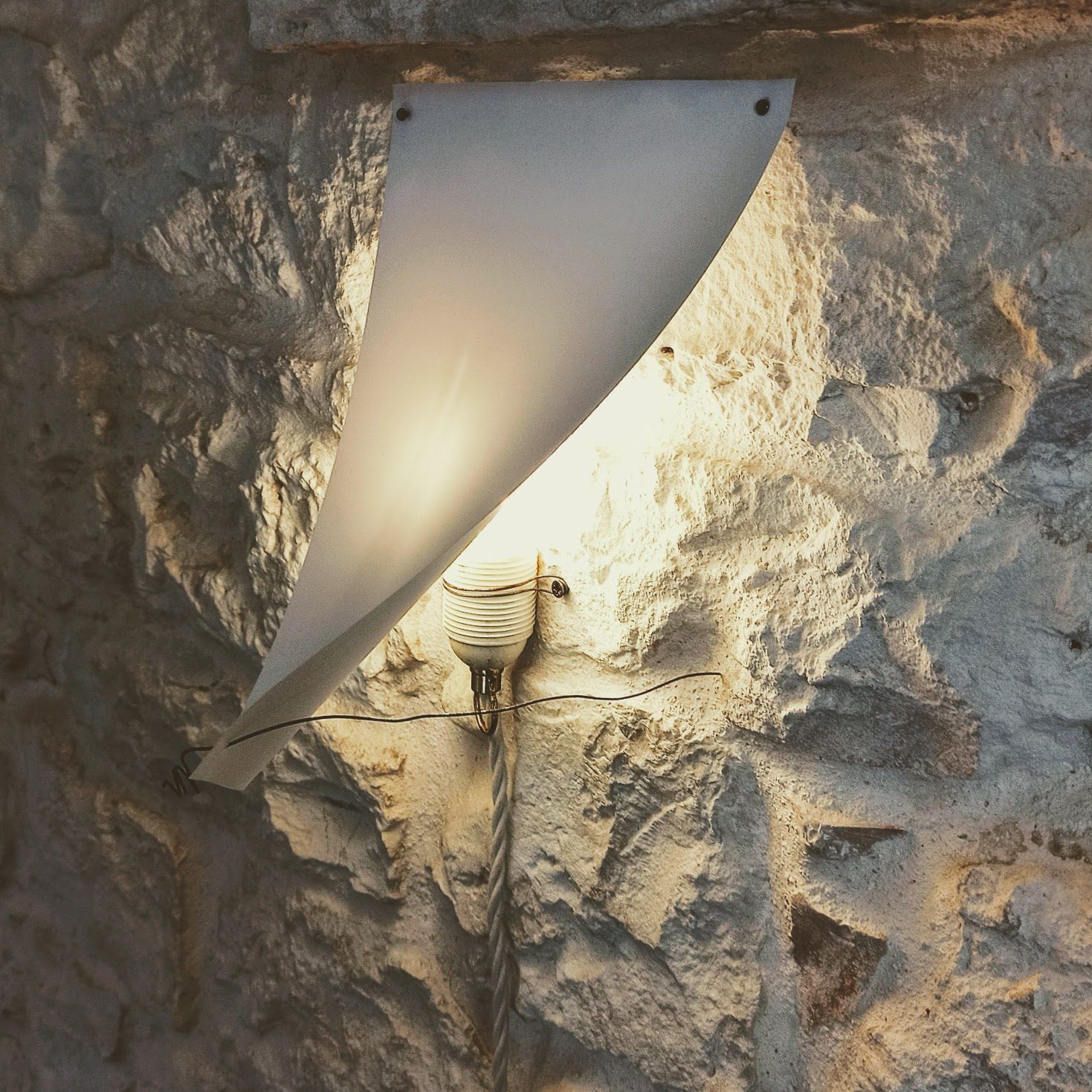
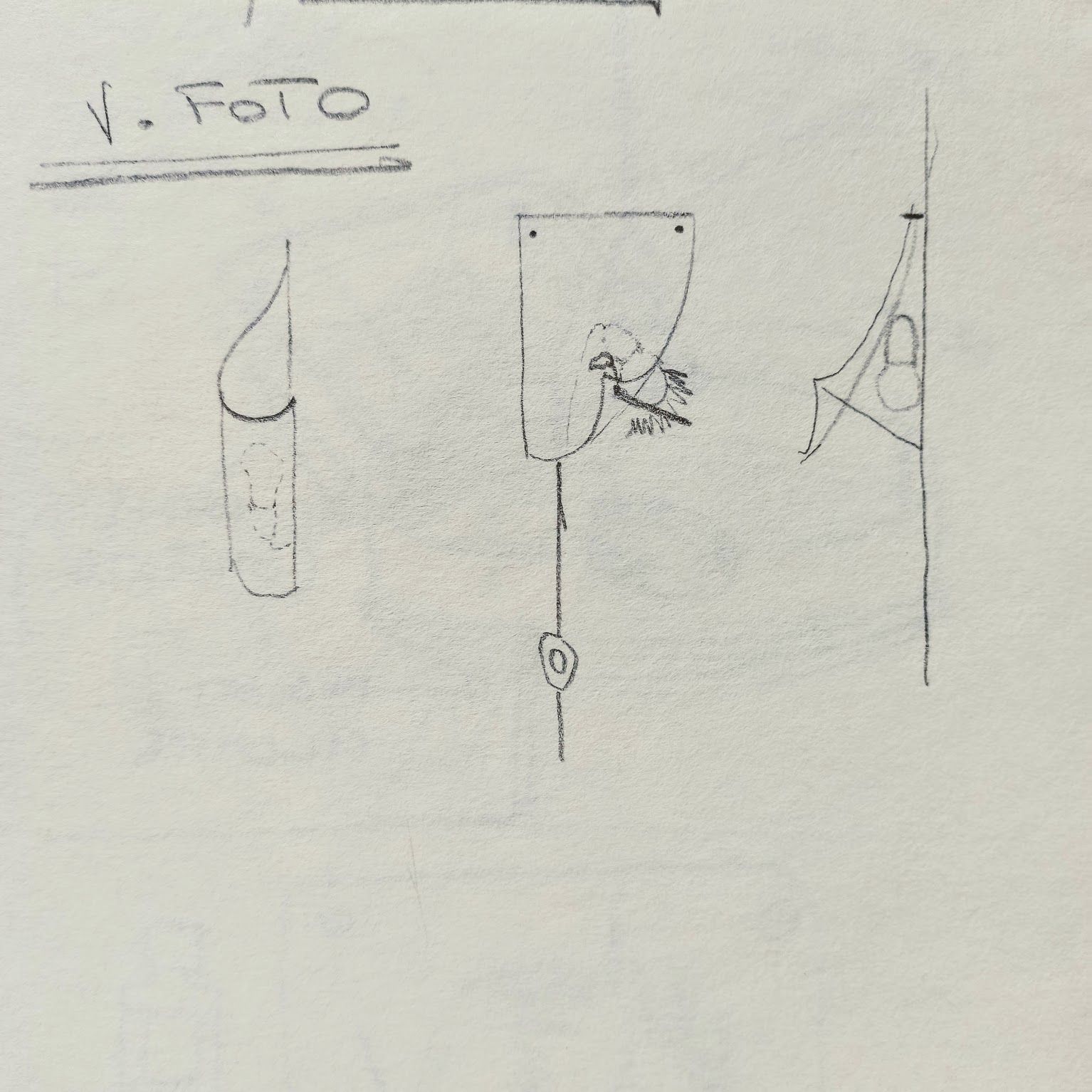
A sheet of paper bent into a curve and nailed to the stone. In front of the bulb it does what the Venus Pudica does: it covers, and lets you glimpse. The light doesn't show itself, it opens onto the wall.
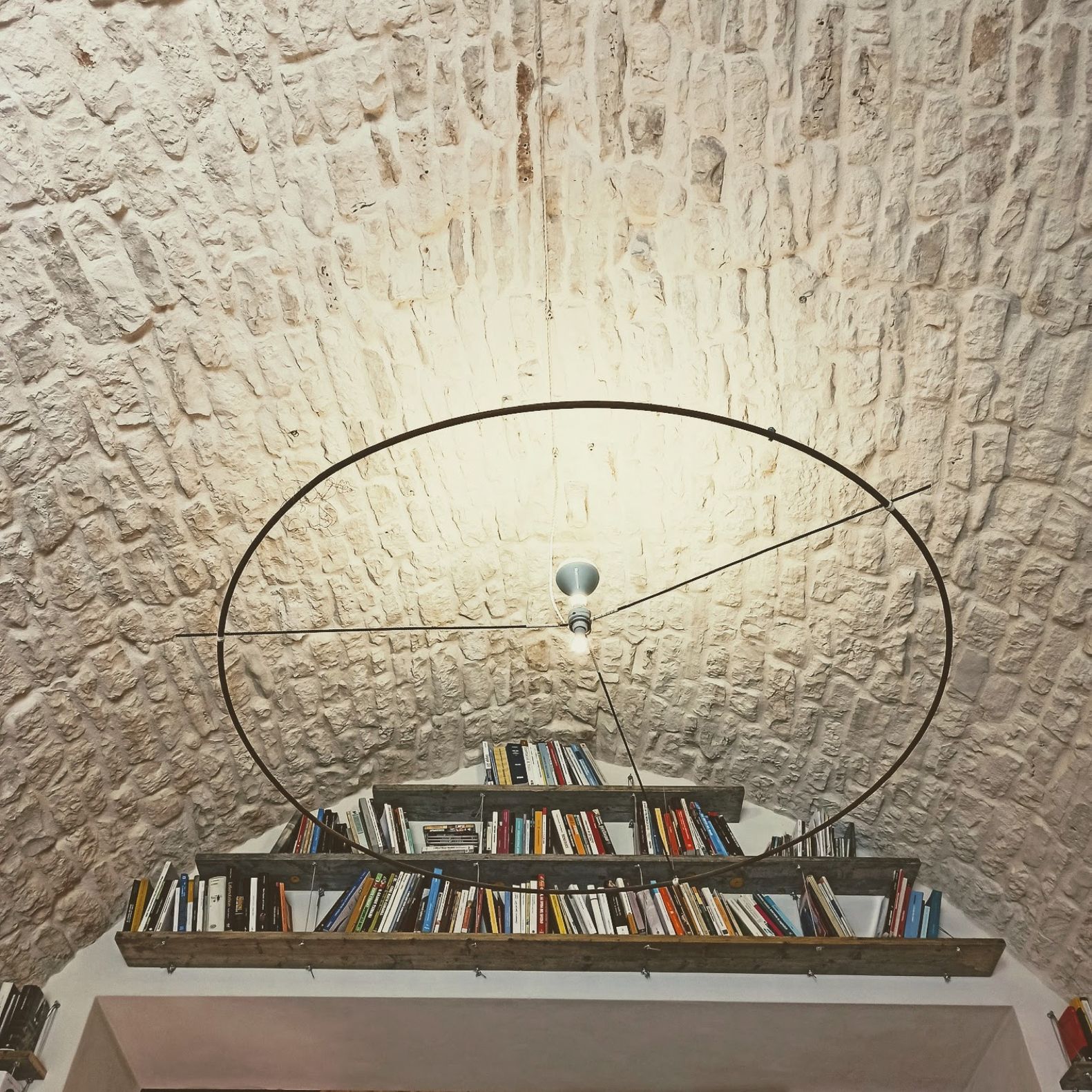
An iron ring beneath the trullo's dome, the bulb at its centre like a sun, and below it the bookshelf, in orbit.
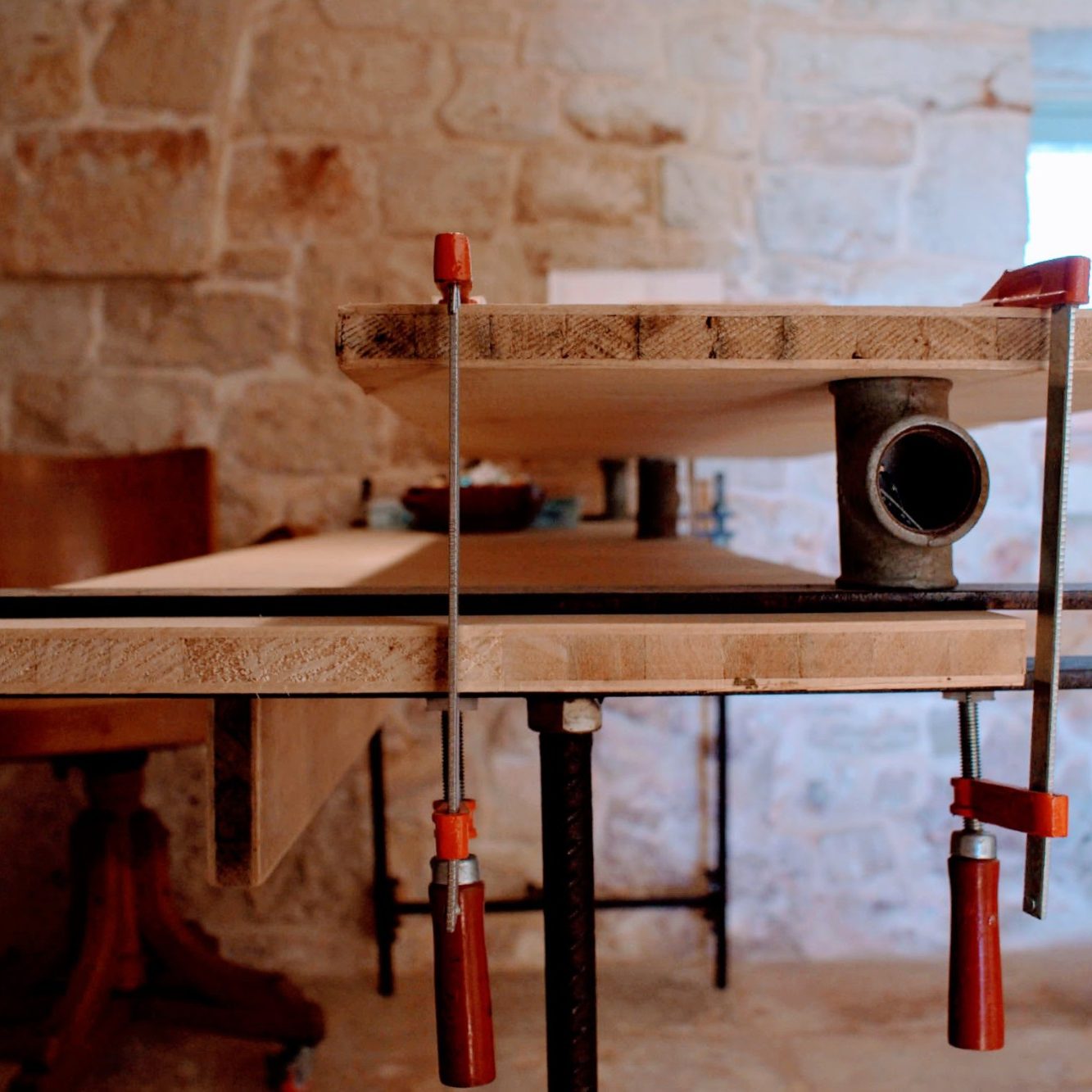
To the Greeks, harmonia was a carpenter’s word, the joint; Heraclitus used it for the agreement of opposites, as in the bow and the lyre. Harmonia was also a goddess, daughter of Ares and Aphrodite: war and love, held together. Here the clamps hold the form together, in a ceaseless effort. Were the tension to stop, the table would fall to pieces…
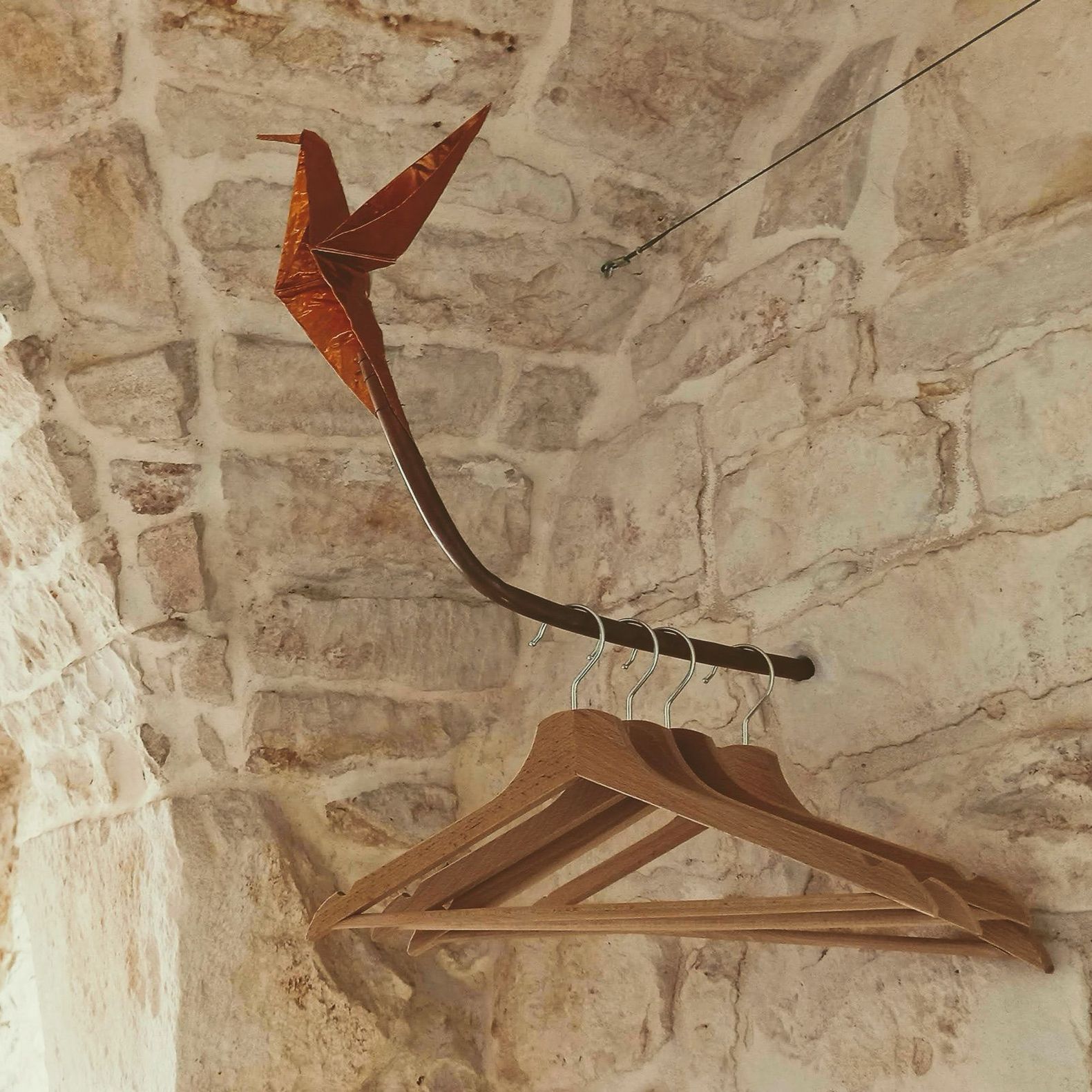
An iron crane comes out of the stone wall and, with all due composure, hands you the hanger.
where perfection is imperfect.
Book