Archaeology
The search for the specchie.
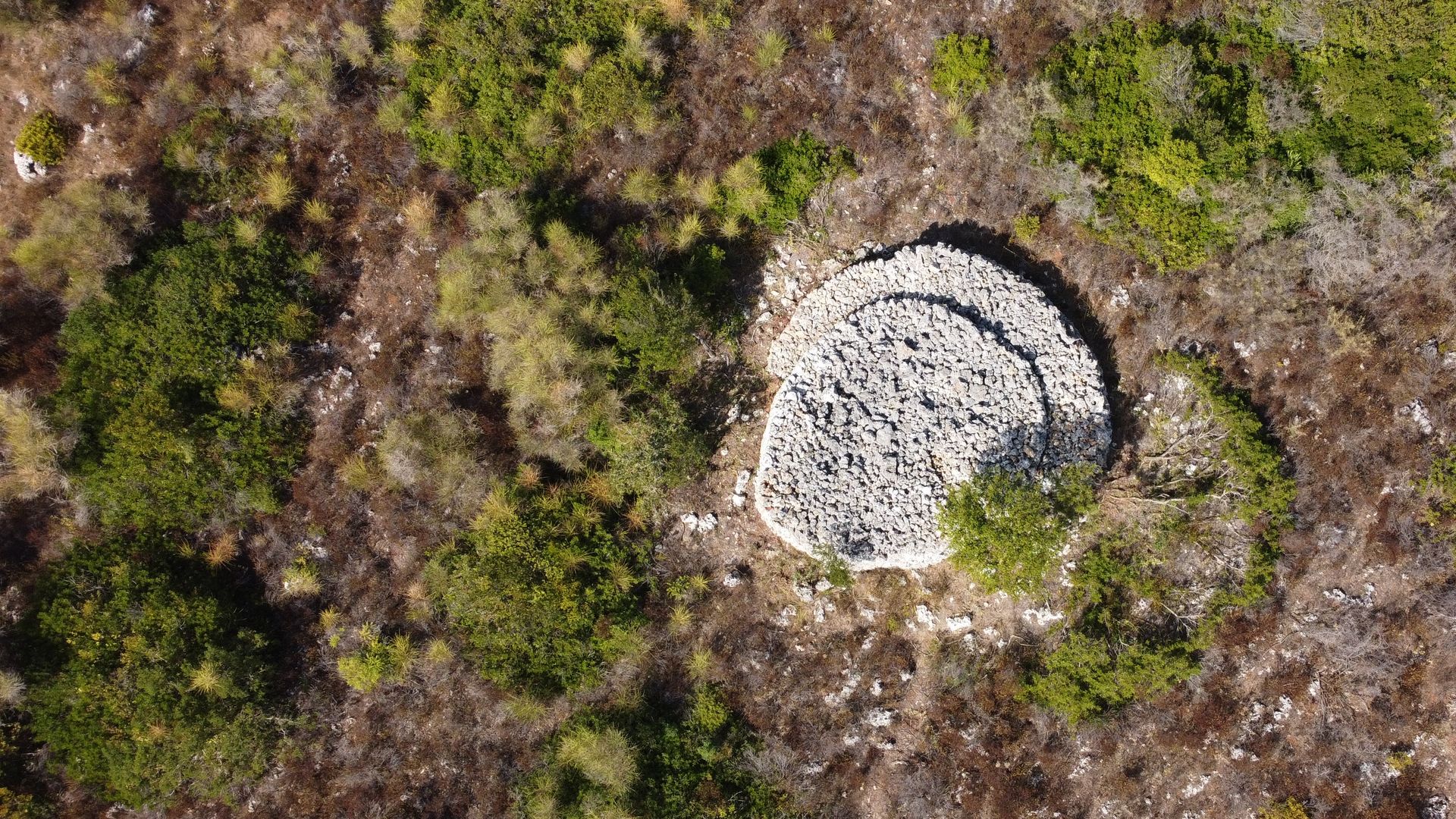
The specchie are mysterious structures from 2,500 years ago. At the Jazzo there are many of them, hidden in the vegetation. You are like an archaeologist in an unexplored land: will you manage to find them?
The specchie are mysterious structures from 2,500 years ago. At the Jazzo there are many of them, hidden in the vegetation. You are like an archaeologist in an unexplored land: will you manage to find them?
An archaeological mystery: that is what the specchie are. Were they lookout posts? Tombs? A way of drawing the landscape? Copies of constellations? Shepherds’ sites? What is certain is that they were built of dry stone thousands of years ago and then abandoned to the scrub, which covered them.
The territory is a palimpsest: a parchment written, scraped, rewritten, where the oldest lines show through beneath the new. Here the parchment is limestone. The first line is the specchie, written in its own stone. Then came the transhumance drove road, the jazzo for the flocks, the trulli, the masseria, the heart-shaped courtyard. In this novel written by History, hunting for a specchia is reading the oldest line.
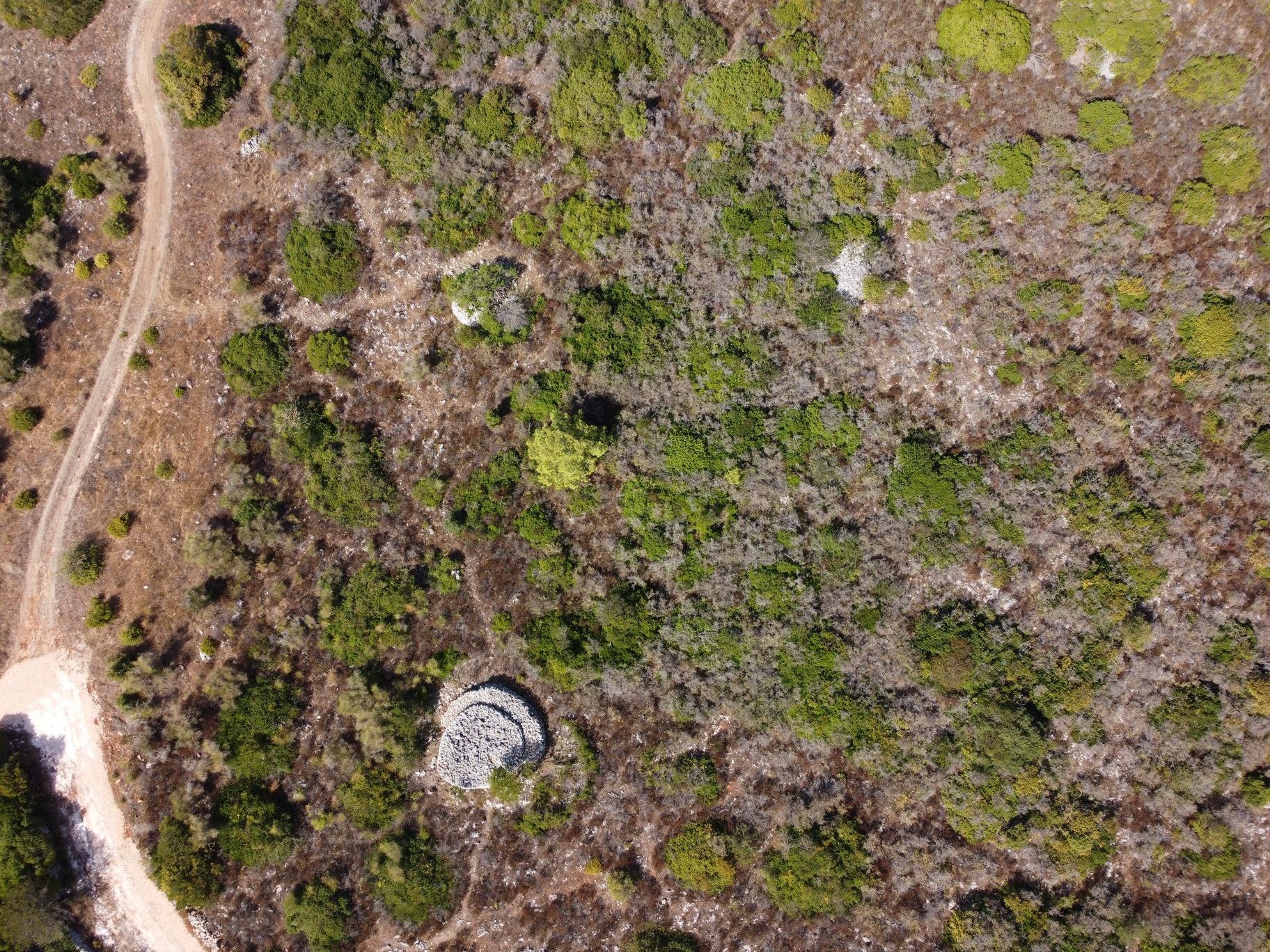
The specchie lie across the masseria’s land. From the path that runs through it, though, they don’t show themselves. You have to step off a few paces, stop, peer. Sometimes, in the harmonious chaos of nature, you glimpse the precision of something made by human hands. Stones too regular to be chance. There: those are the specchie. On foot or by bike, leave the marked path and discover them.
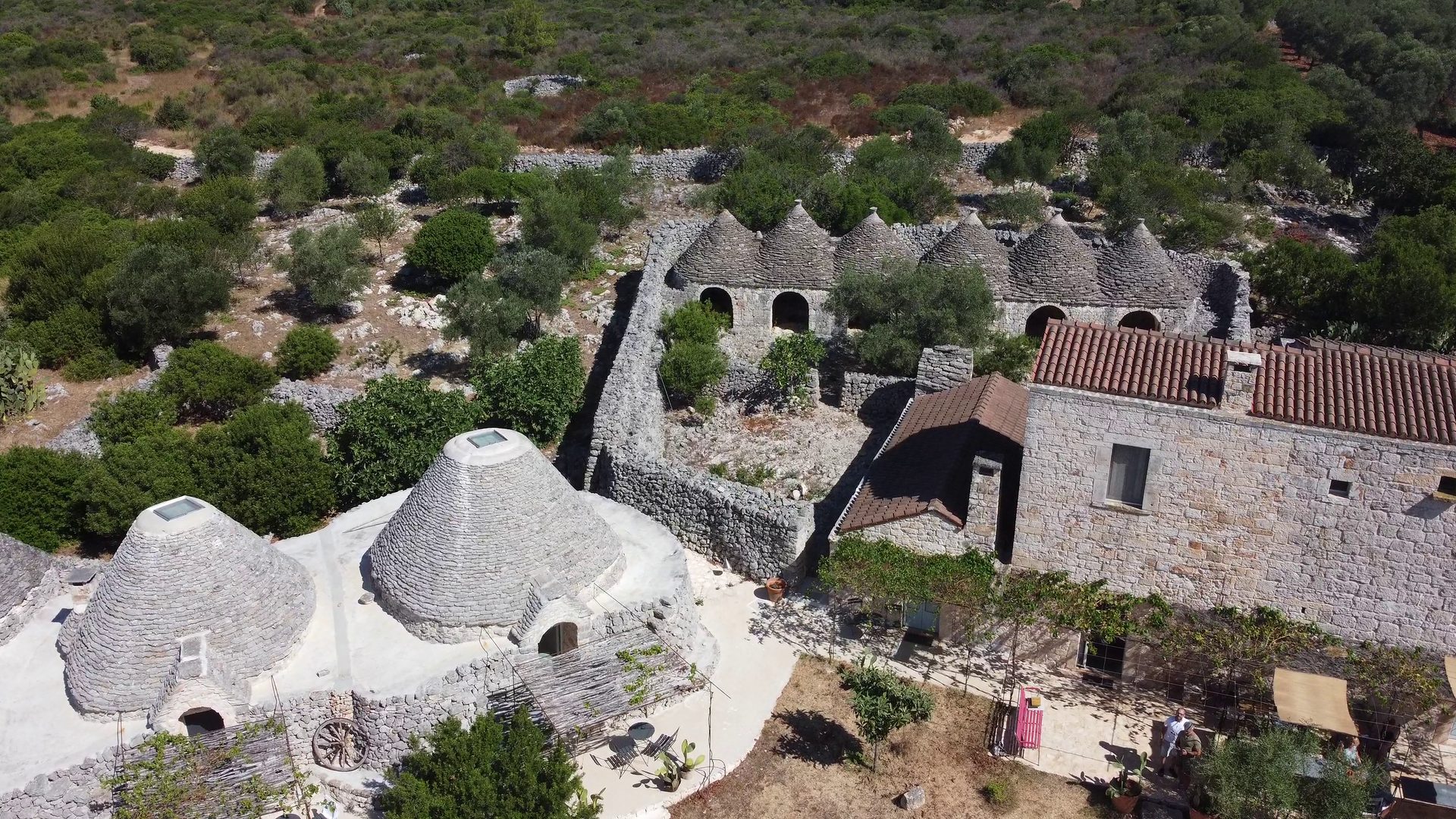
In fact, the specchie are just stones laid one upon another with nothing to bind them. And yet they are still there. Many centuries later, whoever built the trulli repeated the same gesture. Millennia of symbiosis with the rock.
The name comes from the Latin specula, a lookout, and that is the first hypothesis: watchtowers, each within sight of the next. In the 1970s the scholar Giovanni Neglia noticed that around Oria and Ceglie the specchie form rings, and read them as an extra line of defence beyond the city walls. Others were tombs: across Puglia, many small Bronze and Iron Age mounds held burials. Tommaso Crudele, in a 1950 study of the specchie of Terra d’Otranto, recalled that Roman land surveyors used heaps of stones as boundary markers. Later, shepherds turned them into shelters. And some see in them a way of drawing the landscape, or the constellations brought down to earth. Whoever lives with them here chooses an interpretation, or invents another: the search is open and shared, but also a way to let the imagination run free.
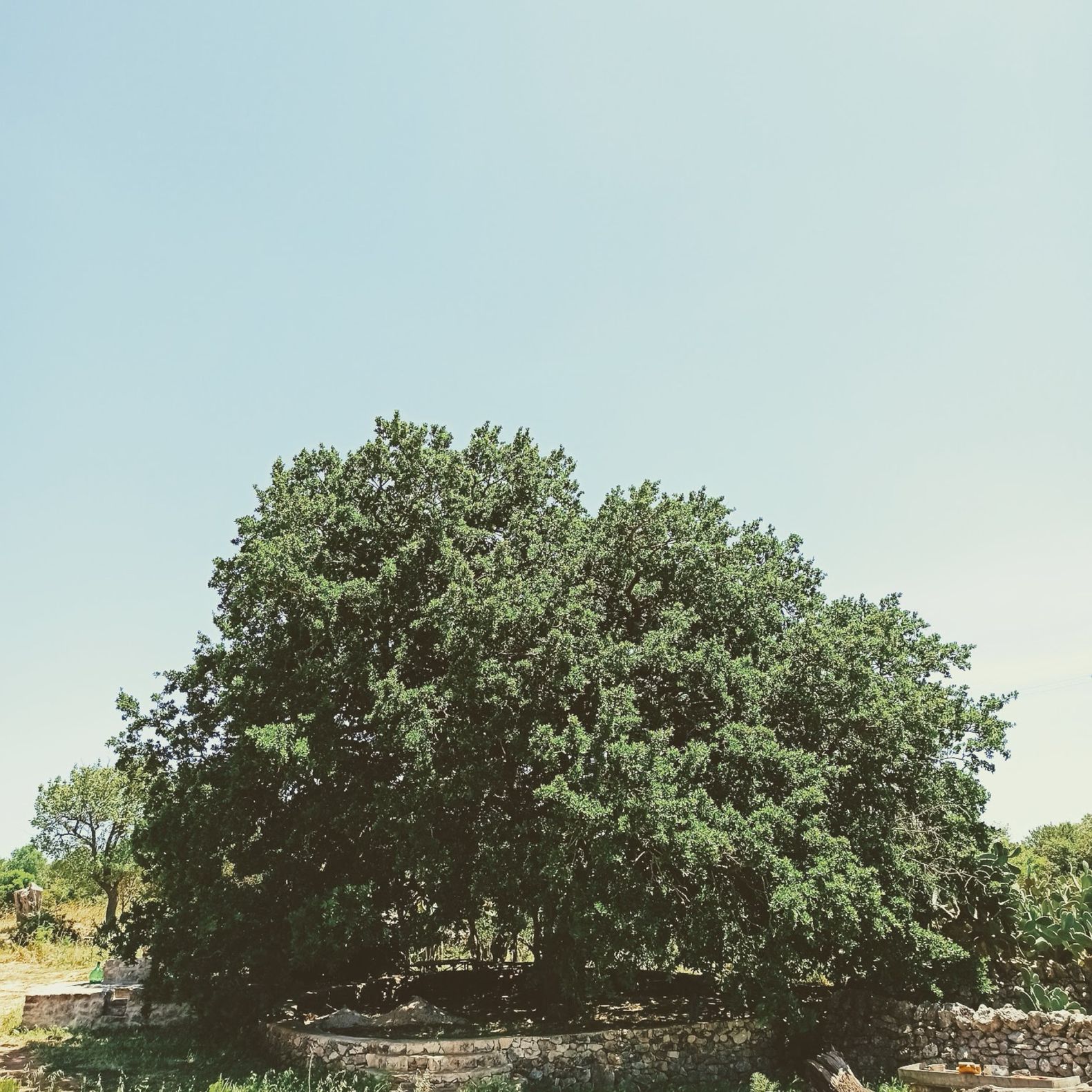
Lojazzo lies within a land the Messapians lived in for centuries, and which still holds the testimony they left. A few steps from the masseria, the Paretone, a stretch of their dry-stone walls. Four kilometres away, Ceglie, once called Kailìa: stretches of its four rings of walls remain, and no other area has given back so many Messapian inscriptions, more than thirty. A little further on, Oria, Manduria with its walls, Egnazia by the sea. Stepping beyond the fence means paying them a visit.
History, and stories →among the specchie.
Book