The collection
The Stars of the Jazzo.
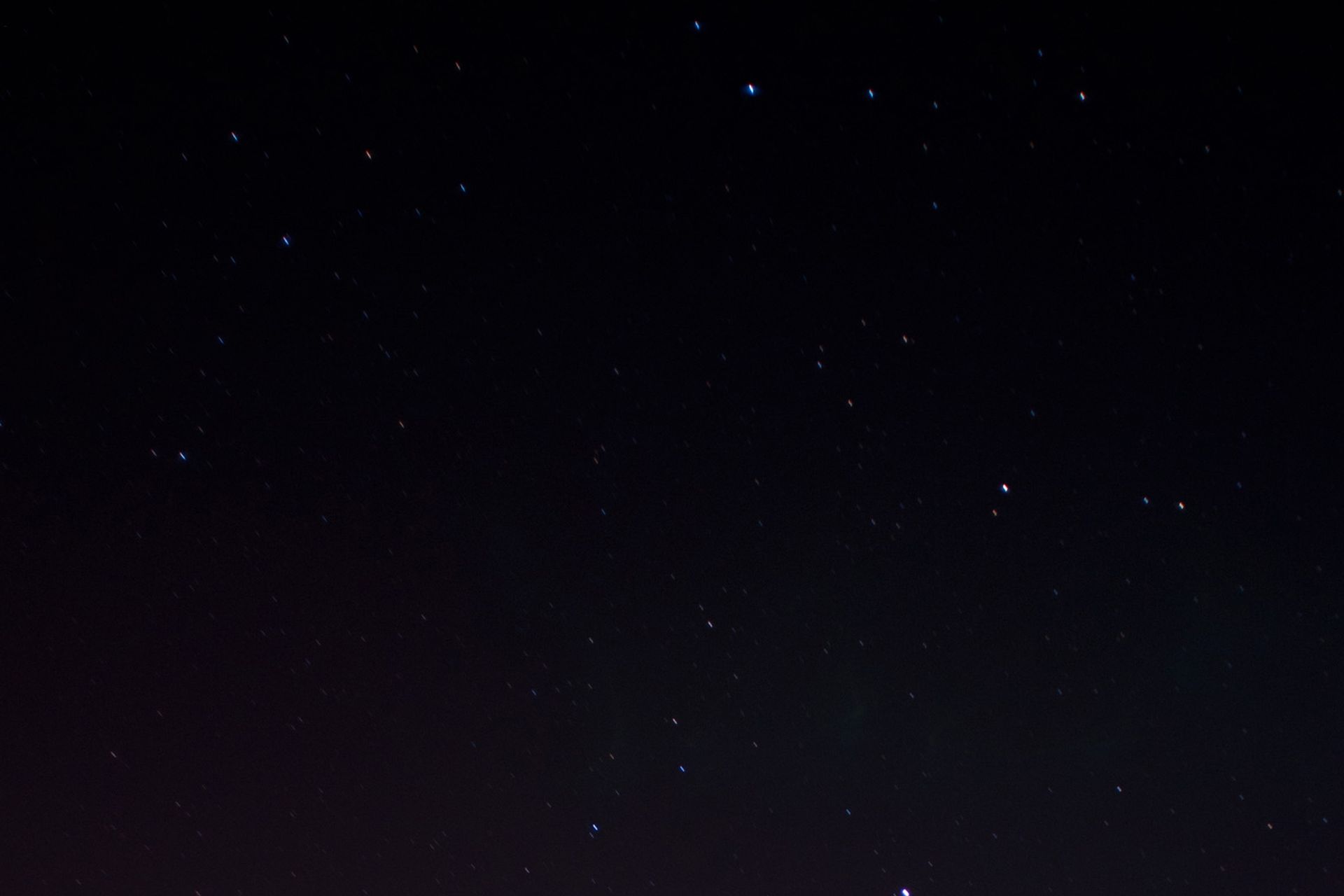
A collection that opens only at night. Like every collection it has its rules: it is kept in the dark, it must not be touched, and whether you can see it depends on the light.
A collection that opens only at night. Like every collection it has its rules: it is kept in the dark, it must not be touched, and whether you can see it depends on the light.
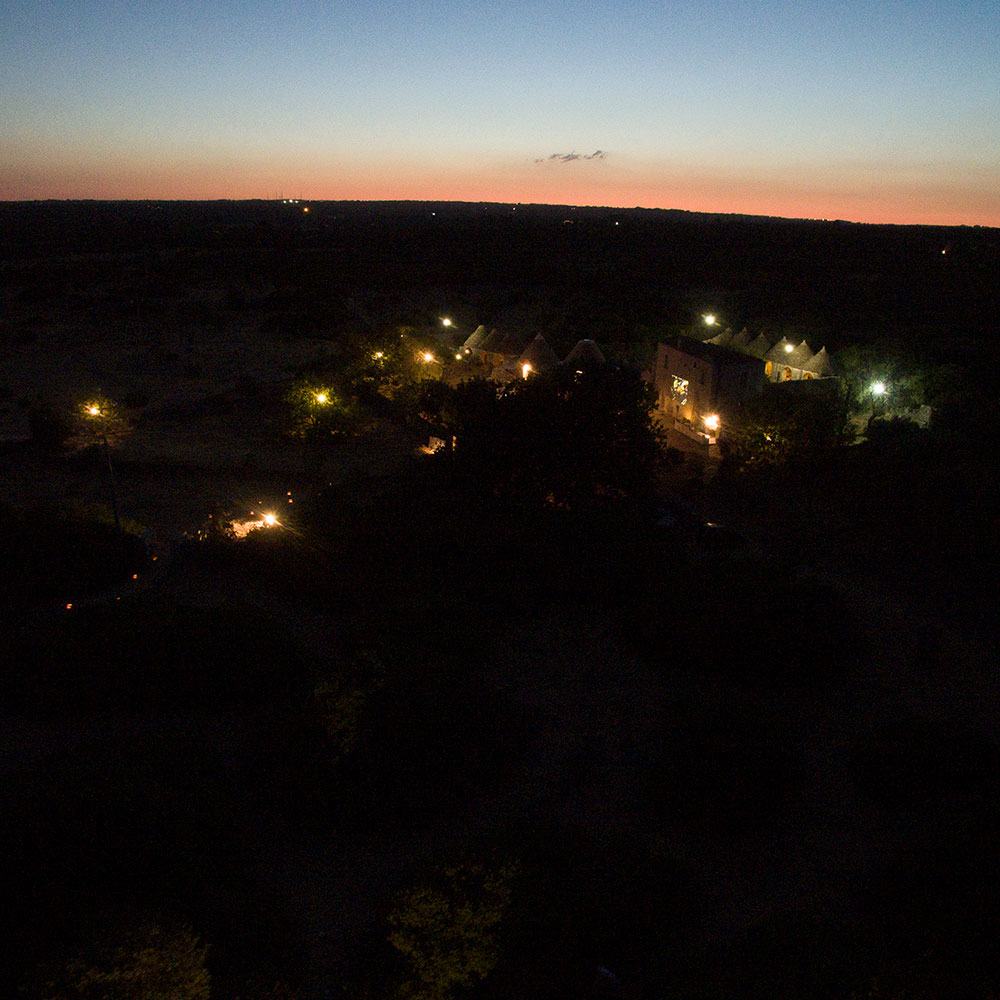
For an observatory, darkness is like oxygen. In the late 1920s they looked for a site for the Mount Palomar observatory, in California. They chose it because back then it stood in the middle of nowhere. But Los Angeles and San Diego were growing fast, with their blinding lights, and the great telescope began to see less far. Around the masseria, at night, only a few lights stay on, and the sky shows whole, deep. It feels close enough to touch.
The collection rotates with the seasons: each night, part of it is on display.
A queen’s hair, set in the sky. Callimachus wrote about it, Catullus translated it; one of our rooms is called Berenice.
With Vega, the brightest star of the Summer Triangle.
The Perseids, the meteor shower of mid-August. Pascoli made them the sky’s weeping in «X Agosto».
His whole story, in the sky: Andromeda, Cassiopeia, Cepheus, Pegasus.
The Pleiades are seven sisters: Hesiod timed his ploughing by them.
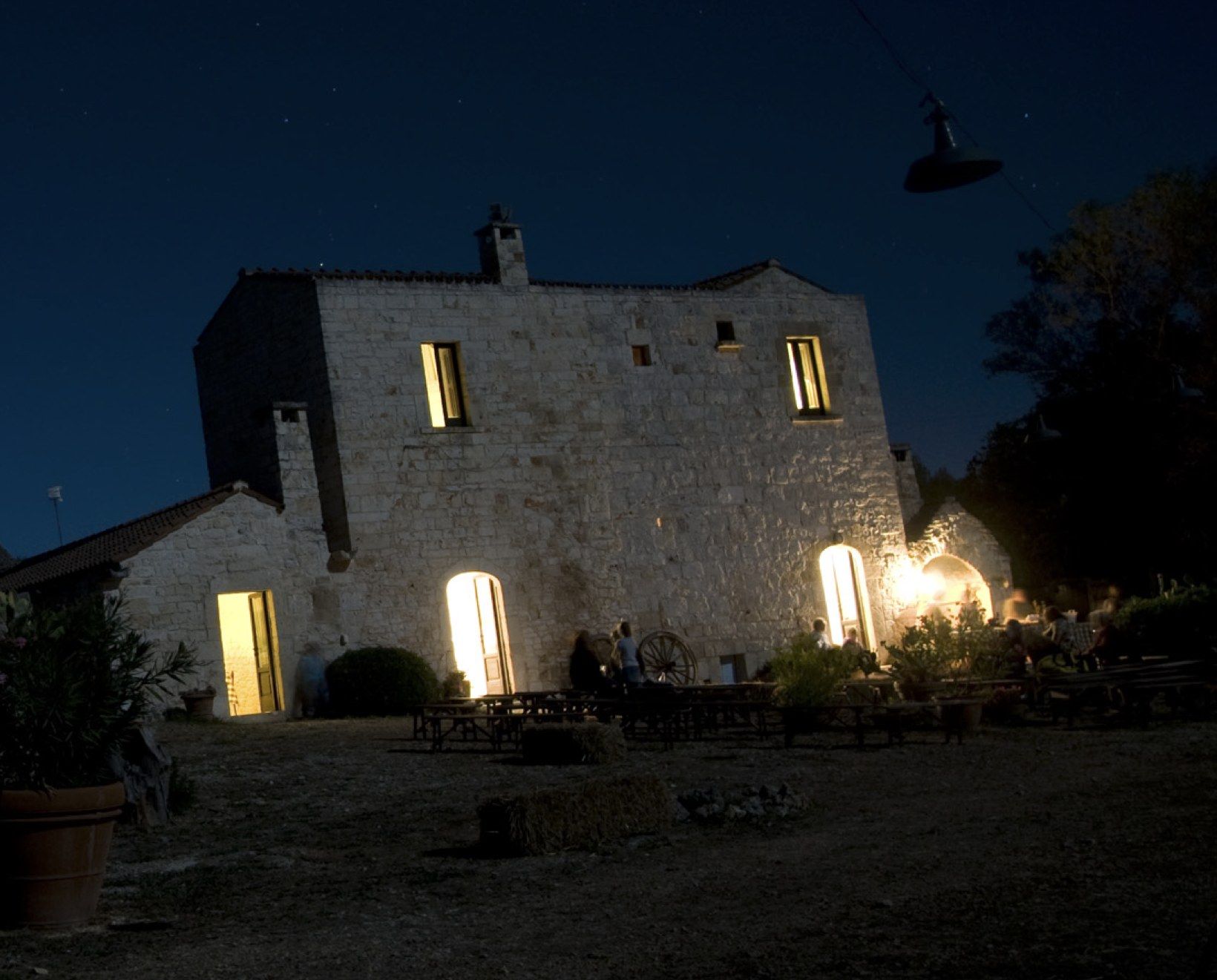
For many years the Moonlight Walk was one of the Jazzo’s best-loved events: everyone set off together from the Masseria and followed the little road between the scrub and the olive trees. Try walking it at night: after a few minutes your eyes get used to the dark, and you begin to see things you would otherwise never see.
«I liked the dark. Walking through space without seeing makes everything more decisive.» — Silvia
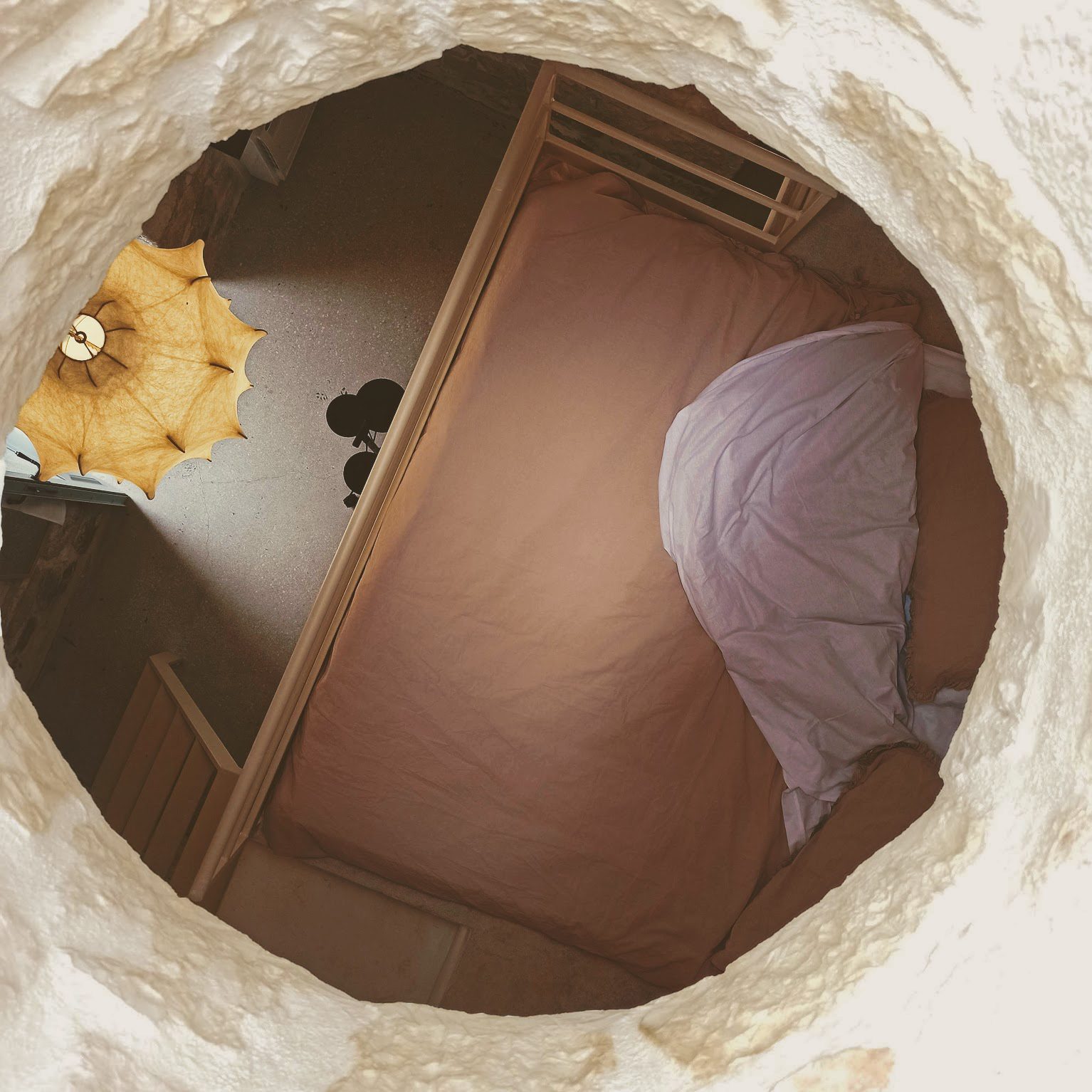
At the top of the cones of the Zefiro and Libeccio trulli there are two skylights. The bed sits on the loft right beneath: you can watch the stars lying down. (In the photo: the Zefiro Trullo seen from the stars’ point of view.)
Zefiro Trullo →under the stars of LoJazzo.
Book